Small Danish Hotels is now Stays. Only our name has changed. Everything else stays the same.
How to make a booking
Click the "See calendar and prices" button to choose dates and see the room selection.
See calendar and prices: Stays Mini BreakSmall Danish Hotels is now Stays. Only our name has changed. Everything else stays the same.
4.598214 of 5 Stars
Includes per person per night:
Click the "See calendar and prices" button to choose dates and see the room selection.
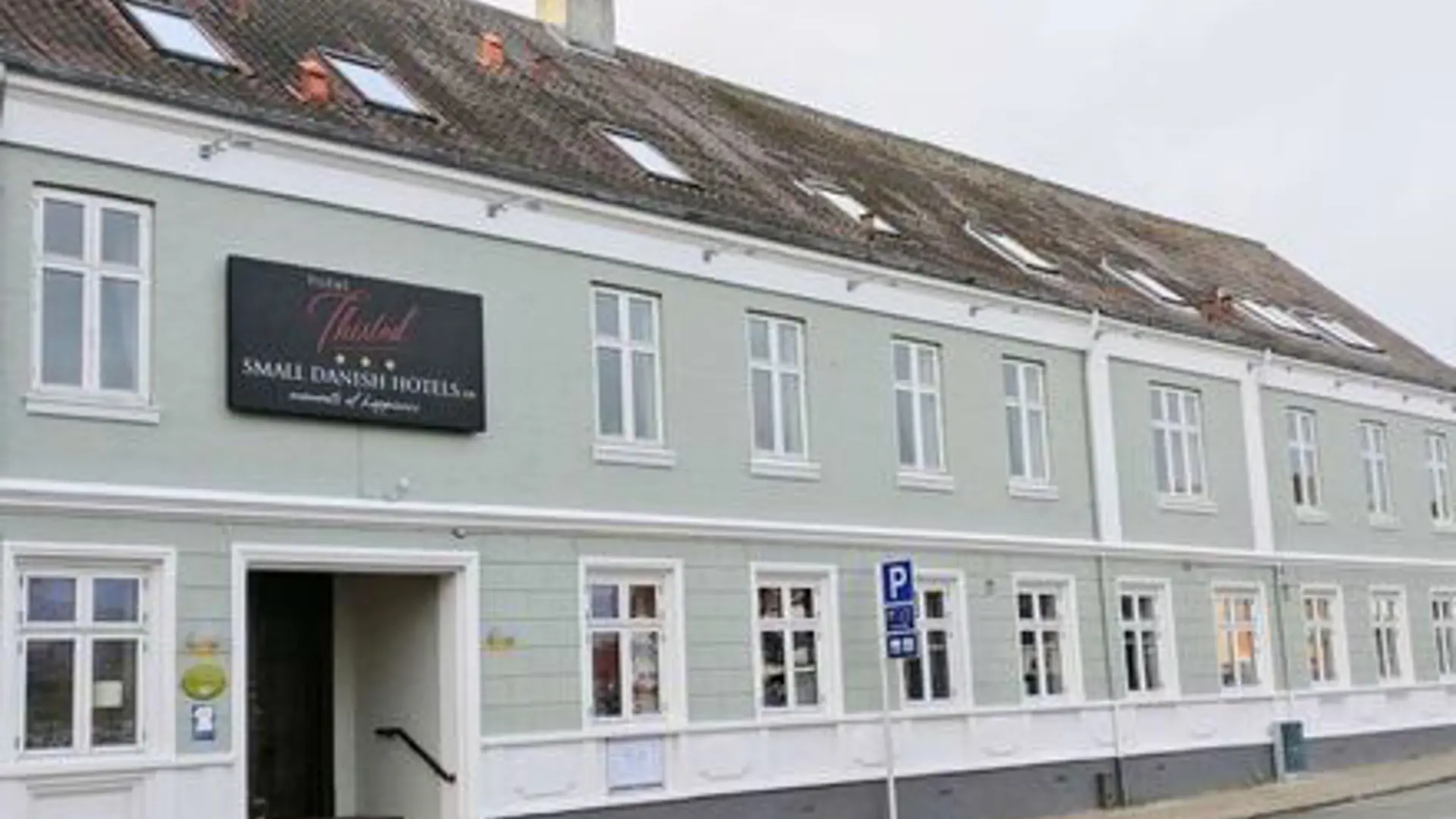
See calendar and prices: Stays Mini BreakFrederiksgade 16, 7700 Thisted
Show map
Arrival Monday - Saturday
Includes per person:
Minimum 2 days
Includes per person per night:
Includes per person per night:
Includes per person per night:
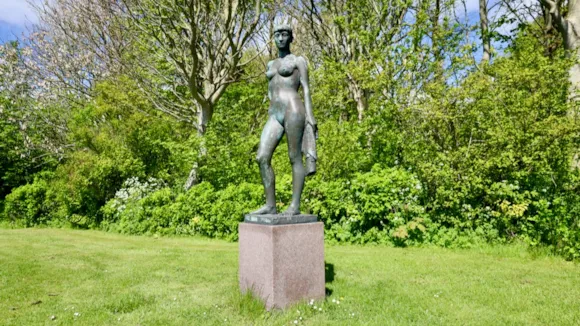
0.23 km
The work was made by sculptor Henning Wienberg Jensen in 1947. In 1956, Wienberg Jensen won the Art Academy's gold medal for the bronze statue when he participated in the competition "A free-standing naked figure for a modern park." The statue was bought by Thisted Municipality the following year.
"Thisted Girl" is also called "Limfjord Girl" and "The most beautiful girl in town".
Henning Wienberg-Jensen was born and raised in Thisted.
0.21 km
The story of Thy – from the Stone Age to surfing culture

The objects' stories and modern forms of communication
At Thisted Museum you can get closer to the good stories about Thy - the many years and the great lines - and about the area's contacts with the wider world from the first Stone Age people to today's entrepreneurial culture.
The museum opened in the summer of 2023 in completely new, beautiful surroundings and with updated information. At this "Thyboernes Nationalmuseum" you can visit seven permanent exhibitions, where the focus is on the objects' stories about life in this area.
In the Gravhøjen exhibition, which is about Thy's rich bronze age, you can meet the Kaller Fund, which, among other things, consists of a unique ceremonial axe; a find that is on a par with the sun chariot and gives us an insight into a past religion. You can also see interesting objects that came to the area in the Viking Age as a result of trade or robbery, and you can get up close to a rune stone and practice writing with runes.
But it's not just about Thy in the very old days, because you can follow the story right up to our own time. Who are the Thybos really? Some have lived here for many generations, while others have moved here with a surfboard under their arm and a dream of what Thy is or can become.
In the museum's attic you can experience history at a child's level and play through what you have seen in the exhibitions.
“Shelter – The Trees of Thy”
New special exhibition at Thisted Museum opening on 28 March.
The new exhibition Shelter – The Trees of Thy at Thisted Museum tells the long history of the people of Thy and their relationship with trees and forests, focusing on changing views of nature closely linked to human use of it. Forests are nature, but they are also cultural history to a great extent.
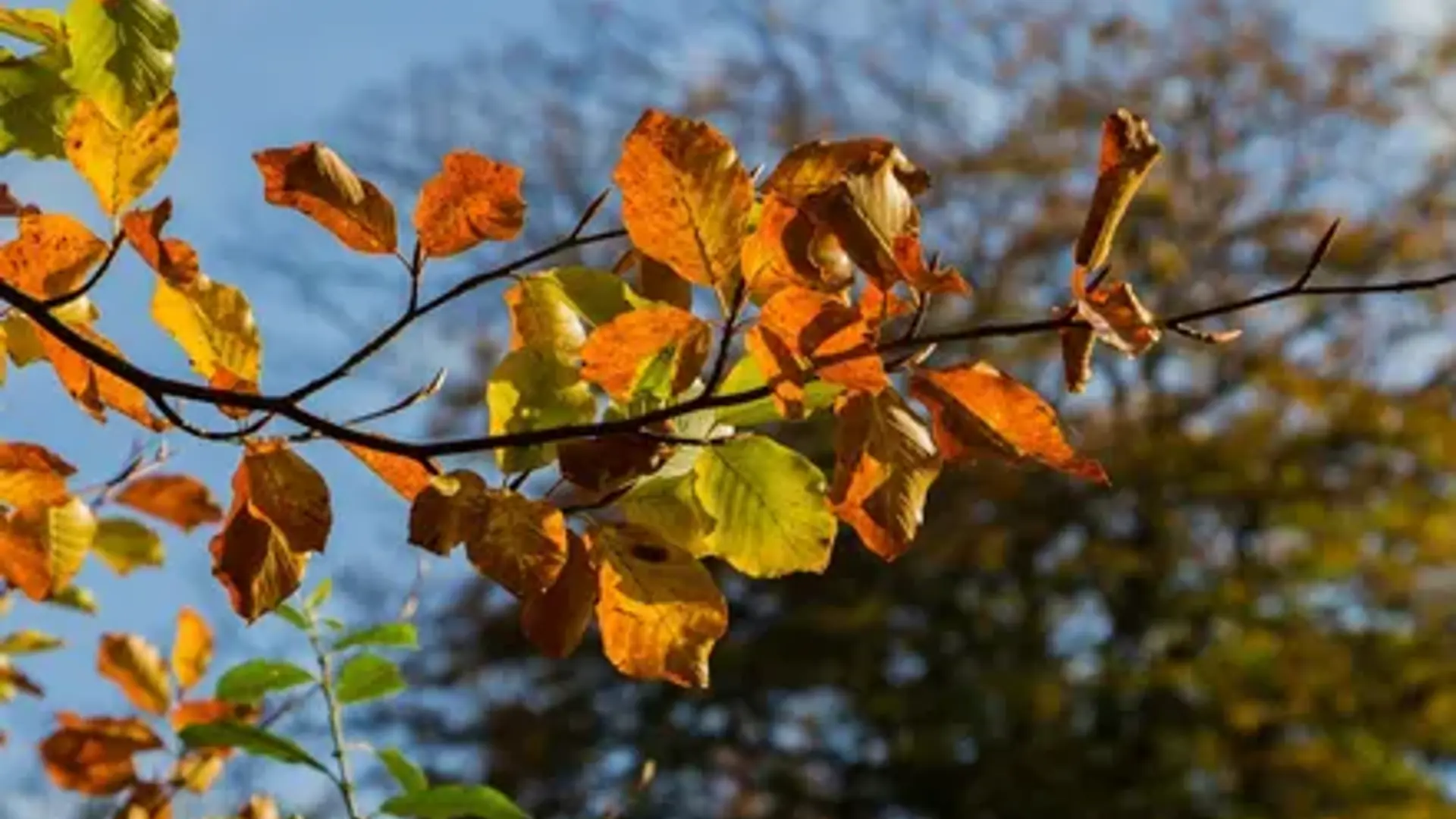
Forests cover 14% of the area in Thy, and for today’s residents they are a natural part of the landscape – including plantations, shelterbelts, and trees around us. Trees provide shelter and form the setting for leisure activities. We notice when the beech trees leaf out, and we enjoy walks in the forest when autumn turns the leaves golden. For most people today, forests are synonymous with nature.
It has not always been this way. In the Stone Age, primeval forest dominated what we now call Thy, but around 6,000 years ago people became farmers, and over time forests were cut down and replaced by fields and open landscapes. By the transition to the Early Bronze Age (1,700 BCE), the forest had almost disappeared, and for the next 3,500 years there were no forests in Thy.
“Forests are entirely absent in Thy.” This is what the parish priest in Skjoldborg, Knud Aagaard, wrote in his book about Thy in 1802. Ten years earlier, in 1792, a royal decree had initiated large-scale efforts to combat drifting sand, which for centuries had damaged living conditions along the west coast. Sowing and planting trees was one method used to stabilize the sand. After several failed attempts, the right tree species were found in the late 19th century, and within a few decades the well-known dune plantations, shelterbelts, and inland forests were established.
It was all the result of human effort, driven by the need for shelter, sand control, and timber production – a matter of survival. Today, this is no longer the case; only few people depend directly on forest resources, and drifting sand is no longer a threat to livelihoods. The forest continues to evolve, and concepts such as rewilding and native species are now central. Trees play a key role in environmental debates, and efforts are underway to increase forest areas, as we now understand their importance for ecosystems.
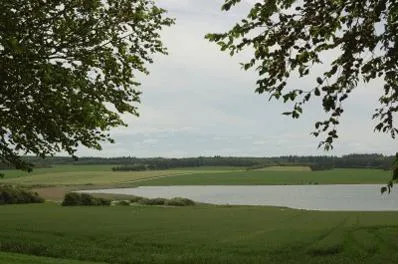
9.78 km
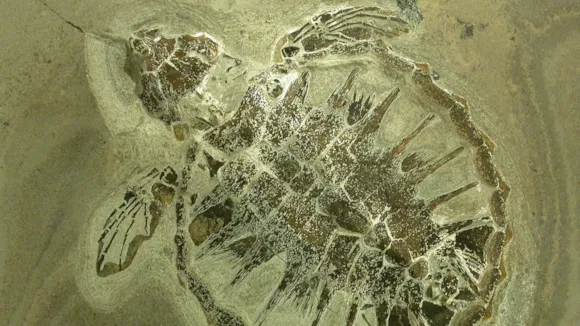
11.44 km
In Nordmors, one of Denmark's most fascinating natural history experiences awaits. The Fossil and Moler Museum takes you back to a time when Mors lay on the floor of a warm sea, and when life left traces that are today preserved in the unique moler.
Here you can explore an impressive collection of fossils – from fish and birds to insects and plants – each with a story stretching back more than 55 million years.
The museum's collection is among the finest in the world when it comes to fossils from moler.
You can discover, among other things:
Each find is a unique window into the past and offers a rare glimpse into the development of life.
Moler is a very special type of clay, formed on the seabed approximately 55 million years ago.
Over millions of years the layers built up, interrupted by volcanic ash from numerous eruptions. These ash layers are visible today as dark stripes in the pale moler cliffs – a dramatic and beautiful testament to the history of the Earth.
Within the moler lie fossils of animals and plants that lived in and around the ancient moler sea.
One of the truly special experiences is the opportunity to go fossil hunting yourself.
In the moler pits around the museum, you may be lucky enough to find your own fossils. With a hammer and a little patience, the outlines of a fish, a bird or perhaps something else entirely may suddenly emerge.
The museum's staff are happy to offer guidance so you get the most out of the experience.
The Fossil and Moler Museum is part of Museum Mors and was established in 1988.
Today the museum is state-recognised and continuously works with new finds and research.
With a combined ticket you can also visit:
This provides a complete experience of both nature, history and culture on Mors.
Location: Nordmors
Experiences: Fossils, geology and nature
Facilities: Shop selling fossils, books, coffee and souvenirs
Target audience: Families, nature lovers and curious guests
What is the Fossil and Moler Museum?
- A museum about moler, fossils and geology with a collection of international standing.
Can you find fossils yourself?
- Yes, the moler pits around the museum offer good opportunities for fossil hunting.
What makes moler special?
- It is 55 million years old and contains unique fossils from a former marine environment.
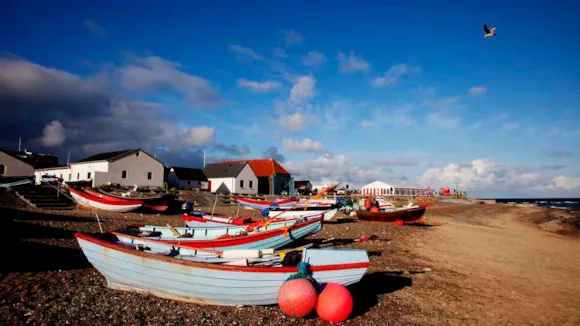
14.87 km
Klitmøller has always been known as a popular holiday village, and now it is also world famous because of it's fantastic windsurfing and surfing conditions, the area is known as "Cold Hawaii".
Nystrup Camping has special housing facilities for surfers.
In Klitmøller you will also find specialty shops with surf equipment, delightful dining options ranging from the food from the grill, home smokehouse, pancakes, pizza or gourmet restaurant.
Klitmøller also has a small regional museum that bears witness to the heyday of fishing from shore. The well preserved, old fishing houses in Klitmøller indicate the great period of trade in the past.
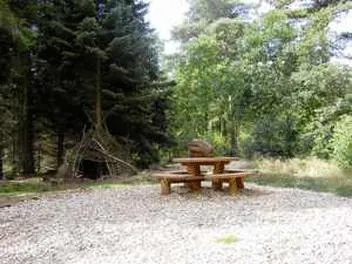
16.28 km
Close by Østerild is a cozy forest playground. There are tables and benches where you can enjoy your lunch, and there is an outdoor forest privy at the site.
Østerild plantation cuts through the old Aalborg Road that divides the plantation into two quite different parts, both with interesting nature.
There are trails marked, in the area. These are marked with red or yellow arrows on low posts:
* The Bogs: 2.8 km.
* Rødbro Fælled trip: 6 km.
* Tamhøjturen: 3.4 km.
* View trip: 2 km.
* Dogs tour: Here is an opportunity to let the dog run free.
Along the way, on each of the trips, you will pass some of Thy's many bronze aged burial mounds.
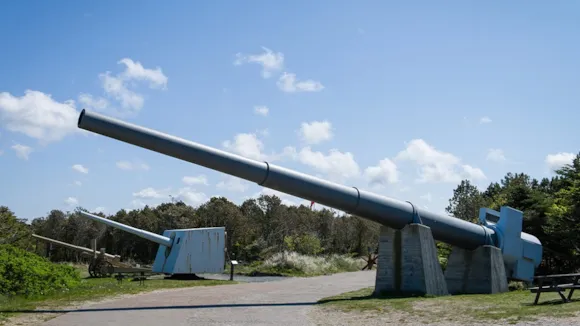
19.07 km
It consists of Hanstholm's unique 2500m2 museum bunker, where several of the rooms have been restored to their original appearance, so you can see how the soldiers lived. In the bunker there are also some exciting exhibitions.
The battery was built in 1941 together with a similar battery at Kristiansand in Norway, blocking the entrance to the Skagerrak, to keep the English fleet out. The battery consisted of four large 38cm guns, each of which had a weight of 110 tons. The guns could fire a distance of 55km... almost halfway to Norway!
Interactive exhibition
The exhibition center on top of the bunker houses the exhibition "Enemy & Neighbour - Hanstholm occupied!" The exhibition is about life in Denmark's strongest fortress during World War II. With the people in focus, the story is told by both the German soldiers and civilian life in the shadow of the fortifications, and how the occupiers and the occupied lived together.
On tour with the ammunition train
Hop on the museum train and take a tour in and around the battery where you pass through an ammunition bunker and one of the bunkers that housed the 38cm cannon. The museum train will take you through the historic terrain along the original narrow gauge track that the Germans built to transport the heavy ammunition to the cannons. The train runs every day during the summer and also in week 42 (Autumn Holiday). The trip is one kilometer long and lasts about ten minutes.
Scenic walks in the occupants footsteps
At Bunker Museum Hanstholm you will find a beautiful and varied forest that was before, just a bare and rugged dune landscape and home to many of the german army’s bunkers. Today you can go on wonderful walks in the nature here.
Explore the many bunkers scattered across the landscape, some underground, others built as lookout points whose foremost role was to spot the enemy. During the year, there are also several guided bunker walks which are free to participate. The dates for the bunker walks can be found on the museum's website or facebook page.
Hanstholm 1 Open-air Museum
In the sand dunes south of Hanstholm you will find the open-air museum Hanstholm 1, which is one of the best preserved coastal batteries in Denmark. The Open-air Museum Hanstholm 1 is also part of the Bunker Museum Hanstholm, so start or end your museum day with a visit to the sand dunes. It’s a great experience for the whole family to walk around the hilly bunker landscape.
Explore the beautiful, undisturbed surroundings and see if you can find all 19 bunkers. They are pretty much all open, so you can go inside and imagine what it was like to lie there and guard a part of the Skagerrak from land.
The Atlantic Wall in North Jutland
In collaboration with other bunker museums in North Jutland, and out of approx. 100 local WWII bunker locations, we have selected 24 of them which we think are really worth a visit. There is an info board at the locations, giving information about the site and its history. Using a QR code on the poster, you can enter the new website via your smartphone and find more information, maps, historical photos and more. You can also use the link here: www.atlantvolden-nordjylland.dkk
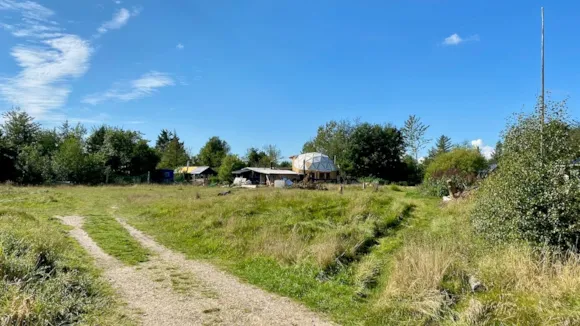
19.9 km
Thy Lejren is owned by the association “Det Ny Samfund”, which is organized with the general meeting (every year, Aug. 21. at 2 pm) as the highest authority, that means there is no board or chairman. Decisions are mostly taken in consensus but voting can also be seen.
Thy Lejren is a social experiment.
22.87 km
Jesperhus Blomsterpark offers experiences for the whole family.
Look forward to fun rides, colourful flowers, entertaining shows, exciting animals in the JungleZoo and loads of experiences – all in one place.
Jesperhus Blomsterpark is Scandinavia's largest flower park and one of Denmark's most popular attractions for families with children. Here a day full of fun activities, colourful flowers, exciting rides and entertainment for children awaits – all in one place.
Children can meet the well-known characters from the Jesperhus universe and enjoy entertaining shows at the amphitheatre stage Jesper Geds Hus, where music, dance and lots of fun for the whole family take place several times a day. Go exploring among thousands of flowers, impressive floral figures and beautiful themed gardens.
In Pirate Land you can try exciting rides, carousels and fun activities, while the large indoor JungleZoo offers experiences for the whole family. Get up close to the many animals, burn off energy in Hugo's Play Area or on
Dino's Jungle Trail, or experience one of Jesperhus's own films in the 4D cinema.
Jesperhus Blomsterpark is the perfect choice for a family holiday, a weekend trip or a fun day out. Here blooming surroundings are combined with exciting rides, play and entertainment for children, so both young and old come away with an experience they won't forget in a hurry.
At Jesperhus you'll also find activities such as bowling, mini golf, VR, Zik & Zak's Abeland and Hugo's Badeland. Just 500 metres from the flower park lies Jesperhus Feriepark, which has even more fun family activities.
Prices and further information at www.jesperhus.dk
What activities are available at Jesperhus Blomsterpark?
- Rides, JungleZoo, 4D cinema, shows and play areas both indoors and outdoors.
Is Jesperhus only for children?
- Jesperhus is aimed primarily at families with children, but has areas and activities for both children and adults.
Can you visit Jesperhus without staying there?
- Yes, the Flower Park is open to day visitors for a fee.
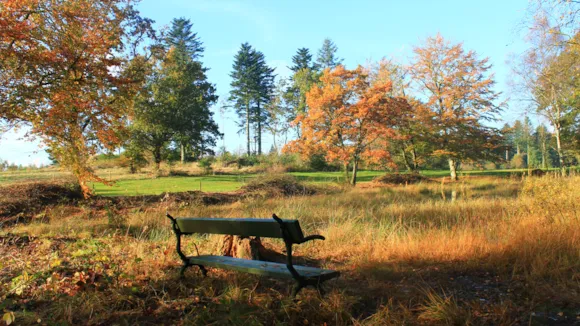
23.47 km
Legind Bjerge on Mors is one of the most striking and dramatic landscapes in Limfjordslandet.
Here the hills rise gently but powerfully, shaped by the enormous forces of the Ice Age, which left behind a rolling terrain of deep valleys and elevated viewpoints.
The area is part of the story of the Lost Land – a landscape that was shaped, altered and in some places disappeared beneath the movements of sea and ice.
Today Legind Bjerge is a peaceful natural area where forest, hills and open landscapes merge into one. Here the sky feels wide and the calm is tangible.
Paths wind through the area, giving you the opportunity to experience nature at your own pace – whether you prefer a quiet stroll or a longer hike.
From the higher points in the landscape, beautiful views open up over the Limfjord and the surrounding countryside.
It is a place where you stop. Breathe. And let your gaze wander.
Legind Bjerge is part of the larger geological area known as the Lost Land – a story of how Denmark's landscape has been shaped over thousands of years.
Here you can trace the marks left by the movement of ice and gain an understanding of how nature created the landscape we see today.
Area: Legind, Mors
Experiences: Hiking, nature and views
Target audience: Nature enthusiasts, hikers and families
What is Legind Bjerge?
- A rolling natural area on Mors, shaped by the Ice Age and part of the Lost Land.
Can you walk in the area?
- Yes, there are good paths and opportunities for both short and longer walks.
What makes the area special?
- The unique hilly landscape, the views and the geological history.
26.43 km
Tools, reconstruction and revitalization
The Cultural History Department houses a large collection of agricultural implements from the first half of the 20th century.
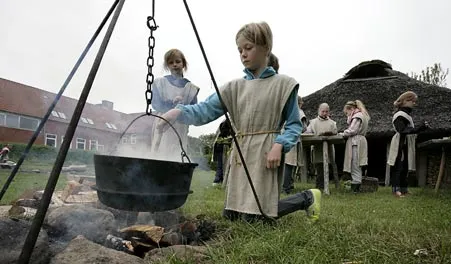
Outside the museum, a reconstruction of an Iron Age house has been erected, the dimensions of which are taken from an archeological excavation nearby.
In the summer, there is a revival and children's activities on the Iron Age site for the benefit of the visitors every year in the month of July.
Sydthy Art and Culture Center
Heltborg Museum's art department houses several artists associated with Thy. Their works are exhibited occasionally. Paintings, drawings and lithographs by Jens Søndergaard (1895-1957) and works by Leo Estvad and Ellen Raadal, and sculpture exhibition by Erland Knudssøn Madsen are a regular part of the exhibition.
At Heltborg Museum, the local poet Hans Bakgaard has his own memorial room. He was a good singer and dreamed of a singing career. Therefore, he went to America, but he returned home disappointed and settled on his childhood home at Ydby. He became a poet and even published his own collections of poems and dilettante pieces. For some years he also arranged hometown concerts in Ydby.
Activity all year round
During the year there are various activities for all age groups.
Heltborg Museum is part of Museum Thy.