Small Danish Hotels is now Stays. Only our name has changed. Everything else stays the same.
How to make a booking
Click the "See calendar and prices" button to choose dates and see the room selection.
See calendar and prices: Moments of Happiness 3Small Danish Hotels is now Stays. Only our name has changed. Everything else stays the same.
4.611111 of 5 Stars
Includes per person per stay:
Click the "See calendar and prices" button to choose dates and see the room selection.
See calendar and prices: Moments of Happiness 3Møllegårdsvej 7, 9600 Aars
Show map
2 days/1 night
Includes per person per stay:
3 days/2 nights
Includes per person per stay:
7 days/6 nights
Includes per person per stay:
Includes per person per night:
Includes per person per stay:
Minimum 3 days/2 nights
Includes per person per stay:
Arrival all days except July and August
The stay includes per person per stay:
No breakfast included
Includes per person per night:
No breakfast included
Includes per person per night:
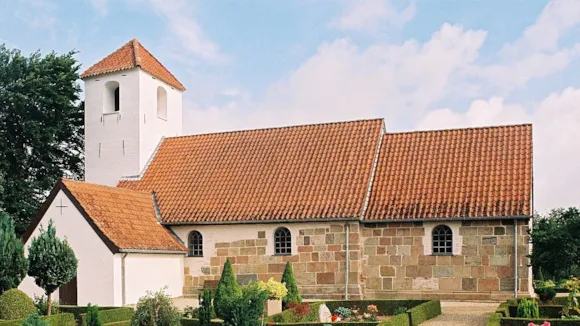
3.02 km
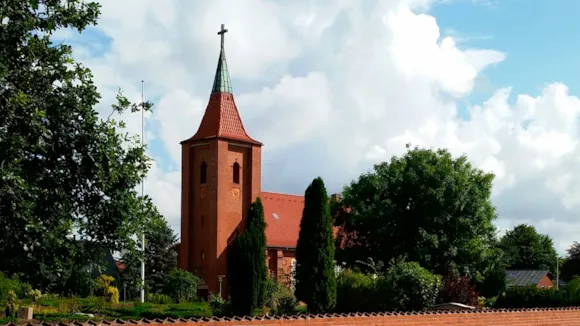
Binderup Church is a Romanesque church, built between 1050 and 1250. Over the years, the church has been rebuilt and restored several times, and around the year 1500, the narrow tower was added to the building.
The most recent major renovation took place between 1998 and 2002, when the church underwent a thorough restoration. During this work, the former altarpiece was moved to a niche at the western end of the nave, while the chancel was given a new interior created by sculptor Erik Heide. He also created the new Christ glass mosaic in the reopened east window.
The church contains several historic details. The pulpit dates from around 1600, and the Romanesque baptismal font features a South German baptismal dish from 1575.
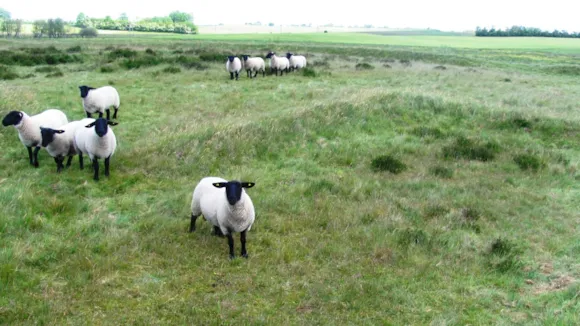
4.95 km
Borremose Fortress is located approximately 3.5 kilometres southeast of Aars and is considered Denmark’s oldest known refuge fortress. The area is known to have been inhabited as early as around 250 BC.
The fortress was rediscovered in 1929, when a farmer working in the bog uncovered a thick layer of stones. It turned out to be a stone-paved road which, during the Iron Age, led through the bog to the raised area where the fortress was located.
Borremose Fortress covers an area of almost 1 hectare. Today, parts of the site have been reconstructed, giving visitors an impression of what the fortified village may have looked like. Of the two original ramparts, only the inner one has been preserved.
Archaeological studies show that the site functioned as a refuge fortress from around 300 to 150 BC. It was then abandoned for approximately 50 years – during the same period in which the Cimbri migrated. Around 100 BC, a village was established on the site, protected by sharpened oak stakes.
Today, Borremose Fortress offers a fascinating insight into Iron Age life, defence and settlement in Himmerland.
5.7 km
7.04 km
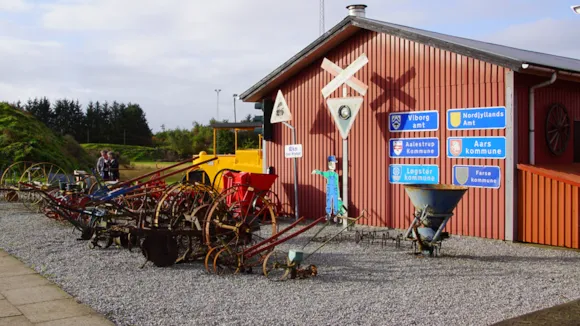
The story of the Danish Present-Day Museum begins in the late 1980s when the now-deceased lawyer Gorm Pedersen from Aars returns home from a trip to Canada. There, he had seen an impressive museum filled with items and memories from the last 100 years. Excited by his experience, he establishes a foundation and engages a group of volunteers.
In May 1994, the Danish Present-Day Museum opens its doors with a newly established collection in a disused smallholding provided by the then Aars Municipality. Since then, the collections have grown, as has the number of buildings. With the latest extension in 2012, the museum now has approximately 1200 m2 of exhibition space.
Most of the items in the museum come from the everyday lives of the Danes as it looked 10, 30, 50, or 100 years ago. Here, there is a hairdressing salon displaying old curlers with wires and electricity. There is a 1930s home with contemporary kitchen utensils. In one corner, a general store is arranged, which many of the local visitors recognize. There is also a schoolroom set up as a village school from the first half of the 20th century.
In the agricultural section, there is an exhibition that covers the history of dairies from milk in glass bottles to bagged milk and today's carton milk, along with a miniature dairy in exact scale with both light and moving mechanics.
In the mixed country store, products like Rich's coffee substitute, bluing, and other fun "old" goods can be found. In the radio/TV section, there are old radios, portable gramophones with period-appropriate records, old and newer televisions, as well as modern equipment like boomboxes and videocassette recorders.
There is something to see for all guests of all ages. There is toys, dolls, calculators, computers, peat excavation tools, and old craftsman's tools. There are also shoemakers, saddlers, printers, and much, much more.
The core element of the Danish Present-Day Museum is voluntarism. All the objects have come as gifts, for example, from estates, heirs, and people who wanted to preserve the history of the Danes and their own for posterity.
The volunteer museum personnel meet diligently every Wednesday to perform repairs, arrange exhibitions, build, and clean. Among the retired enthusiasts with different professional backgrounds, there is no one with any special qualifications for museum operation. For the volunteers, it is the joy that drives them.
As part of Vesthimmerland Museums' Cultural Heritage Month in June, the Danish Contemporary Museum has an exhibition of clothing and teaching materials from the 20th century.
For further information, prices, and opening hours, visit www.dansk-nutidsmuseum.dk
Accessibility:
Parking near the main entrance
Handicapped-accessible toilet
Stable ground
Handicap-friendly doors
Placement of inventory for easy access by wheelchair users
13.44 km
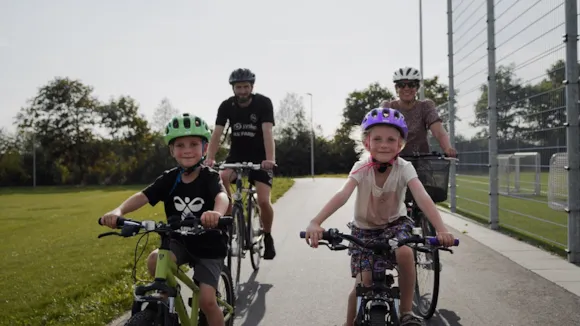
Welcome to the 1,000-meter trail in Farsø Fælled!
You may have already guessed it, but the trail is exactly 1 kilometer long and is part of Farsø Fælled, where it winds its way through charming surroundings with gentle curves.
Farsø Fælled and the 1,000-meter trail are highly popular attractions for jogging, cycling, hiking, and rollerblading, especially thanks to the newly paved asphalt that enhances the experience. Furthermore, the entire trail is illuminated when darkness falls.
During your journey through Farsø Fælled, you'll also find other activities related to the 1,000-meter trail, including a large asphalt hill that is extremely popular for conditioning runs, fitness, and races.
If you're the type who prefers to try to beat your own time record on a 1-kilometer distance, there is also a large timing clock available for free use, which is clearly visible almost all the way around.
So, with a trip to Farsø Fælled, it's guaranteed that the whole family can have an active and enjoyable time together!
Opening Hours: Always open
Admission: Free
16.46 km
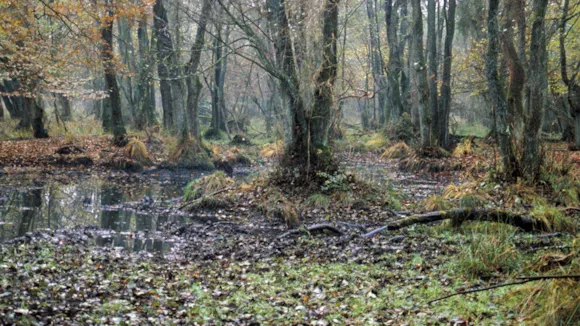
Hidden away in the river valley of Sønderup Ådal, you will find the mill called Højris Mølle, which is part of Skivum Nørrekrat. In this beautiful nature, you can find a mark of Jutland: an oak thicket.
The mill farm is placed centrally in the area, and has from the Middle Ages to early 1900 served as a watermill. It has also been a central meeting place for the local farmers. The mill farm slowly became more dependent on forestry, which begat the oak thickets.
A variety of nature
Højris Mølle contains some of the most varied nature sights in Denmark, both with oak thickets and the creek of Sønderup Å, which cuts through the area. The oak forest, especially, is unusual, because it is planted as an attempt to recreate the old, Danish forest, where livestock roamed among the trees.
Between the oaks, there is an abundance of other plants, such as rowan trees and blueberry bushes. In the more open areas of the meadows by the creek, you can find juniper and heather. On the website or in their folder, you can find a route that will take you through the greatest nature experiences.
Access and accommodation
The entire area is accessible both day and night for those on foot. Biking is only allowed on the gravel paths in the area. You can camp out within the tent site at Højris Mølle, where you can also light bonfires. Be advised that all dogs must be leashed, and fishing in the creek is not allowed.
17.55 km
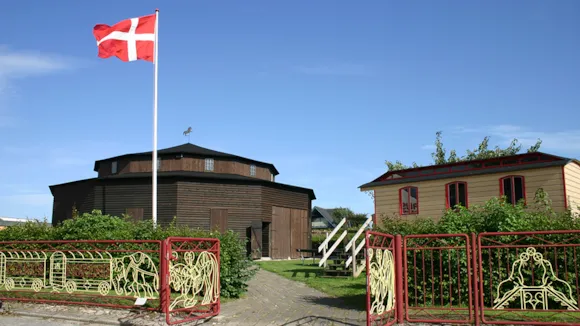
Unleash your inner clown, balance plates on a stick, or dive into 200 years of Danish circus history. At the old winter quarters of Circus Miehe in Rold, visitors are welcomed into a magical world where they can experience both the glamorous life inside the ring and the tougher life outside.
Circus wagons, glittering costumes, old posters, and circus artifacts are on display, and in a special area, equipment and costumes are available for visitors to play circus performers themselves. Right next to the museum is the more than 100-year-old, twelve-sided riding hall - built in wood with a real circus ring.
Visit nordmus.dk to learn more about events and the possibility of hosting children's birthdays at the museum, which also has a lovely little shop offering everything a true circus enthusiast could desire.
For opening hours and more, please see here.
17.81 km
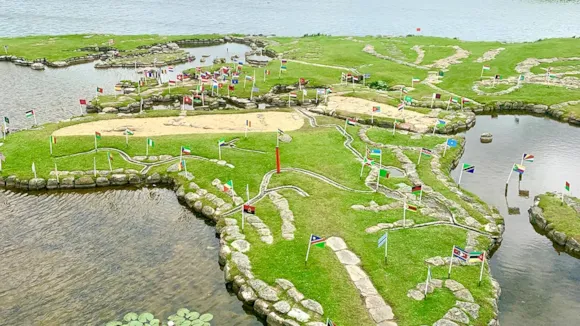
Discover the whole world in miniature, with lakes, rivers, mountains and flags! Widespread as an atlas, The World map lies at the shores of the lake with beautiful green open spaces ...
There is a playground, activities and puzzles for the entire family. You can go sailing in the Pacific, try pony riding or a horse-drawn carriage in the summer season, mini golf and much more.
There is shop, cafeteria and picnic area with a view of the whole world. The glass pavilion can be reserved for groups.
Guided tours are available upon request.
18.3 km
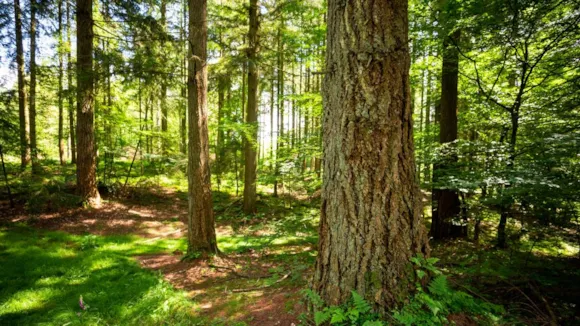
Rold Skov is Denmark’s largest continuous forest and covers more than 80 km² – over 8,000 hectares. The forest is located close to Rebild Bakker and is an ideal place to explore nature all year round.
Here, you will find a varied landscape of forest, lakes, springs, streams, hills, old trees, sinkholes, historical traces and stories from legends, forestry and more recent Danish history. Rold Skov is not one uniform forest, but a mosaic of different woodland areas, each with its own distinctive character.
The forest is especially popular among hikers, cyclists, mountain bikers and nature lovers. Here you will find both short routes for a peaceful walk and longer trails for those who want to spend many hours in nature.
Rold Skov is known for its varied natural landscape. Here, you can walk through dark coniferous forests, old beech woods, open areas, hilly heathland, lake landscapes and spring areas. Beneath the forest floor lie thick layers of chalk and limestone, which help create some of the area’s most distinctive natural phenomena.
The limestone filters the rainwater before it emerges as clear spring water in the forest’s springs. At the same time, the groundwater’s slow dissolution of the limestone over thousands of years has created sinkholes – deep depressions in the landscape where underground cavities have collapsed.
In several places in the forest, you will also find old sunken roads, burial mounds and traces of life and work in the forest from earlier times.
Rold Skov contains many different types of woodland and natural areas. In some places, beech trees dominate; in others, conifers take over, and several areas have their own special history.
The beech is the original forest tree species in the area, and in Troldeskoven you will find the famous “røllebøge”. These are beech trees that have grown as multi-stemmed trees from the stump of a felled tree – an old form of woodland management known as coppicing.
Wind, weather and the trees’ genetic origin have given the røllebøge their crooked and almost troll-like appearance. Many of the trees are more than 300 years old and close to their maximum lifespan.
In Kyø Skov, also known as Urskoven, nature has been left to manage itself since 1850. The area is designated as untouched forest, where fallen trunks are left to lie and decay.
This creates good habitats for fungi, insects and cavity-nesting birds such as woodpeckers. The oldest trees in Urskoven are around 300 years old.
In the mid-1800s, fast-growing conifers from North America began to be introduced. This can be seen, among other places, in the area known as Jætternes Baghave, where you can experience impressive conifers, each with its own distinctive character.
Here you will find, among others:
Den Jyske Skovhave is a living tree museum, founded in the 1940s by forest supervisor Jens Hvass. Here you will find more than 150 different tree and shrub species from across the northern hemisphere.
This is also where you will find the dog forest Den Jyske Skovhave, Denmark’s first dog forest. Here, dogs may run freely under supervision.
Read more about Den Jyske Skovhave
Rold Skov has a special ownership structure that has shaped the forest’s appearance over the centuries. Only around 25 percent of the forest – approximately 2,000 hectares – is owned by the state and managed by the Danish Nature Agency.
The remaining approximately 75 percent is privately owned and divided between three large estates:
Because Rold Skov consists of both state-owned and privately owned areas, access, signage and facilities may vary from place to place. It is therefore a good idea to plan your trip in advance and check routes, parking options and access conditions.
The subsoil of Rold Skov consists of chalk and limestone deposited millions of years ago. The limestone is an important part of the explanation behind the forest’s springs, lakes, special plant life and sinkholes.
The limestone layers function as a large natural filter. Rainwater seeps down through the ground, is purified on the way and later emerges as clear spring water.
Among the best-known springs in and around Rold Skov are:
When groundwater dissolves the limestone underground over a long period of time, large cavities can form. If the roof of such a cavity collapses, a sinkhole is created.
In Rold Skov, you can experience, among others:
Rold Skov contains several lakes, and two of the most interesting are Store Økssø and Madum Sø. They are very different, but both are popular destinations for excursions.
Store Økssø is known for its tea-coloured water. The colour is caused by a high content of humic acids from the surrounding peat bogs. Today, the lake has been restored and is a popular place for swimming.
Around Store Økssø, there is a path of approximately 3 km, which goes all the way around the lake and is wheelchair accessible.
Madum Sø is located in the eastern part of Rold Skov. The lake is one of Denmark’s cleanest lobelia lakes, with crystal-clear water and a white sandy bottom.
Madum Sø is approximately 200 hectares in size and up to 7 metres deep in the middle.
Among the old, crooked beech trees of Bjergeskoven hides one of Denmark’s rarest plants: Frueskoen.
This rare orchid thrives here because of the calcareous soil, which is so characteristic of Rold Skov’s geology. If you want to see its striking yellow flowers, you should plan your visit for early June, when it is usually in full bloom on the bright forest floor.
Please note that Frueskoen is extremely vulnerable and fully protected. It is therefore protected by a fence, allowing the few plants to survive undisturbed.
Rold Skov is not only a natural area. The forest also holds stories of human life, work, fear and survival through time.
There was activity in the area as early as the Bronze Age. The landscape is scattered with burial mounds, and especially Svinehøjene and the 50 burial mounds at Rebild Bakker bear witness to early settlement.
In the 1800s, Rold Skov was so large and impenetrable that, according to the stories, it served as a refuge for outlaws. The tales of Røverne fra Rold are still a central part of local cultural history.
The forest also plays a role in more recent Danish history. Deep inside the area near Thingbæk Kalkminer lies Koldkrigsmuseet REGAN Vest. The bunker was built in the 1960s as a nuclear-secure facility for the Danish government and royal family. Today, REGAN Vest is a museum offering a unique insight into one of Denmark’s greatest secrets.
Rold Skov offers many opportunities for outdoor activities all year round. You can hike along marked trails, cycle through the forest, visit lakes, springs and streams, or explore the forest’s many stories.
There is a wide selection of marked routes in and around Rold Skov. Some are suitable for short walks, while others take you through larger parts of the landscape.
Rold Skov is also a popular area for cyclists and mountain bikers. The forest contains some of Denmark’s best and most challenging mountain bike routes, including the well-known 24-timers MTB-rute.
In winter, the hilly terrain and the forest’s geographical location provide good opportunities for skiing. The area is considered one of the best places for skiing in Denmark when the weather and snow conditions allow it.
If you want the best overview of experiences, routes and practical information in Rold Skov, you can find inspiration on RebildPorten’s website.
Here, we have gathered suggestions for hiking routes, cycle routes, attractions, nature sites and good stops along the way. You can read more about, among other things, Rebild Bakker, Rold Skov’s springs and lakes, Troldeskoven, hiking routes, mountain biking and other experiences in the area.
You are also welcome to use the Danish Nature Agency’s map of Rold Skov when planning your trip. The map gives you a good overview of the forest’s experiences and routes, making it easier to find what best suits your visit.
19.73 km
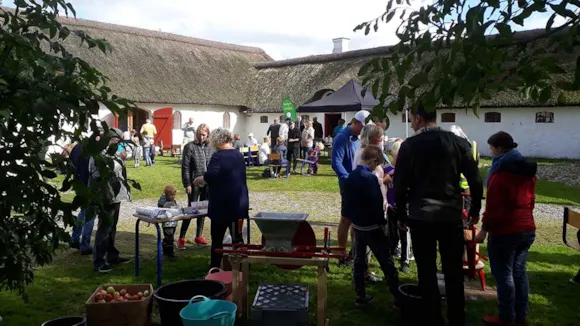
The centre is situated 10 km south of Nibe. The theme for the exhibit in the old barn is agricultural history. See the old farm tools and read the plates that have information about family living conditions in the countryside from the time period 1900–1950. Furthermore, you can experience Northern Jutland's beautiful photography exhibit on projects on restoring nature in Halkær Ådal.
In the mill from 1664, you can see the millwork and read about water mill techniques and the history of Halkær Mill.
If you are interested in a tour of the mill or the surrounding nature, please call +45 99 31 19 55.
19.8 km
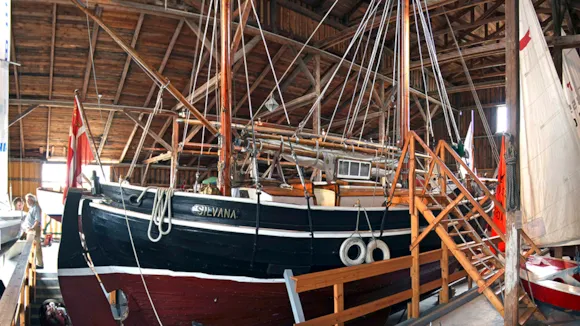
In total, there are about 30 wooden boats exhibited in the museum - from the smallest Optimist dinghy to the yacht Silvana, which guests can board. The warehouses themselves are worth a visit. They were built in the 1930s and were previously used by Hobro Grain.
All aspects of life on and around pleasure boats are represented in the museum, which is housed in two old warehouses at Hobro Harbor.
See the old boats. Feel the scent of tar and wood. Enjoy the impressive wooden structures of the buildings. There are ships, drawings, maps, and models to see, and there will be special exhibitions.
A cavalcade of boat types, from the yacht "Sylvana" from 1895 to the modern sailboard, is exhibited along with, among other things, communication, navigation, and rescue equipment.
A fantastic maritime museum.
See opening hours and more here.