Small Danish Hotels is now Stays. Only our name has changed. Everything else stays the same.
Rold Skov
Photo: RebildPorten

Photo: RebildPorten

Photo: RebildPorten



Rold Forest
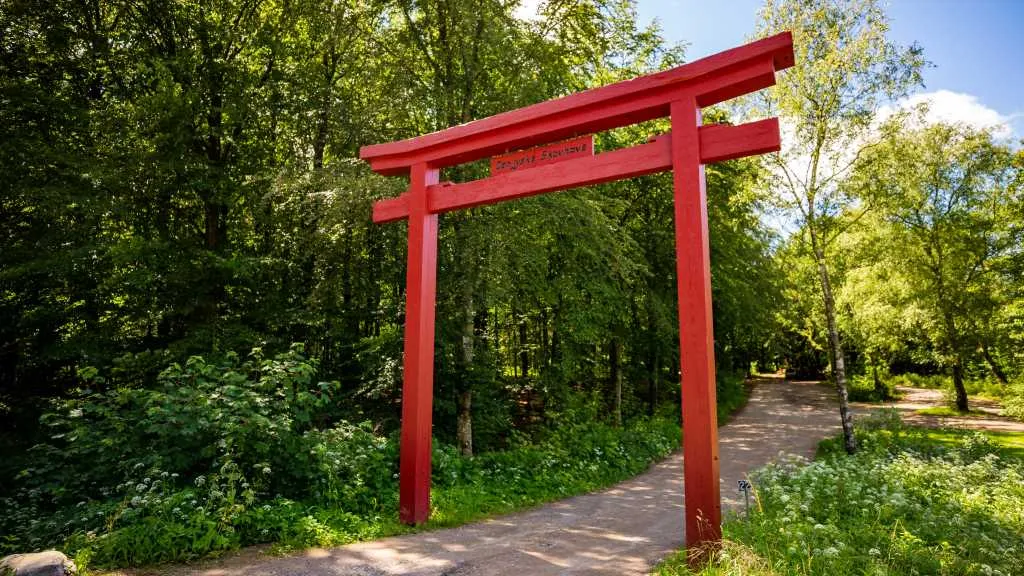
Rold Skov is Denmark’s largest continuous forest and covers more than 80 km² – over 8,000 hectares. The forest is located close to Rebild Bakker and is an ideal place to explore nature all year round.
Here, you will find a varied landscape of forest, lakes, springs, streams, hills, old trees, sinkholes, historical traces and stories from legends, forestry and more recent Danish history. Rold Skov is not one uniform forest, but a mosaic of different woodland areas, each with its own distinctive character.
The forest is especially popular among hikers, cyclists, mountain bikers and nature lovers. Here you will find both short routes for a peaceful walk and longer trails for those who want to spend many hours in nature.
Experience nature in Rold Skov
Rold Skov is known for its varied natural landscape. Here, you can walk through dark coniferous forests, old beech woods, open areas, hilly heathland, lake landscapes and spring areas. Beneath the forest floor lie thick layers of chalk and limestone, which help create some of the area’s most distinctive natural phenomena.
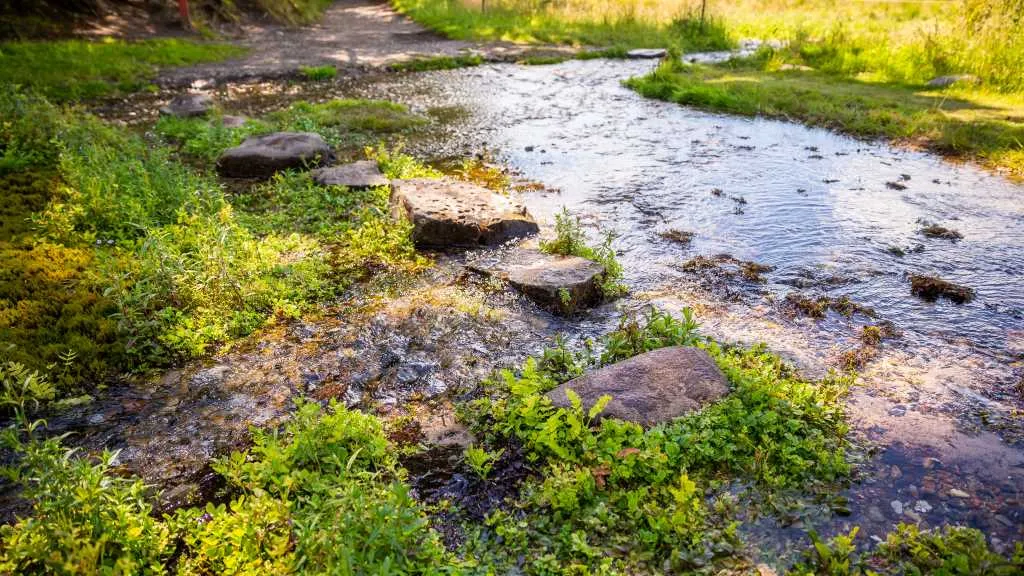
The limestone filters the rainwater before it emerges as clear spring water in the forest’s springs. At the same time, the groundwater’s slow dissolution of the limestone over thousands of years has created sinkholes – deep depressions in the landscape where underground cavities have collapsed.
In several places in the forest, you will also find old sunken roads, burial mounds and traces of life and work in the forest from earlier times.
The many faces of the forest
Rold Skov contains many different types of woodland and natural areas. In some places, beech trees dominate; in others, conifers take over, and several areas have their own special history.
Troldeskoven
The beech is the original forest tree species in the area, and in Troldeskoven you will find the famous “røllebøge”. These are beech trees that have grown as multi-stemmed trees from the stump of a felled tree – an old form of woodland management known as coppicing.
Wind, weather and the trees’ genetic origin have given the røllebøge their crooked and almost troll-like appearance. Many of the trees are more than 300 years old and close to their maximum lifespan.
Urskoven
In Kyø Skov, also known as Urskoven, nature has been left to manage itself since 1850. The area is designated as untouched forest, where fallen trunks are left to lie and decay.
This creates good habitats for fungi, insects and cavity-nesting birds such as woodpeckers. The oldest trees in Urskoven are around 300 years old.
Jætternes Baghave
In the mid-1800s, fast-growing conifers from North America began to be introduced. This can be seen, among other places, in the area known as Jætternes Baghave, where you can experience impressive conifers, each with its own distinctive character.
Here you will find, among others:
- Douglas fir, which can reach more than 50 metres into the air
- Grand fir, also known as giant fir, which is known for its characteristic scent of orange when you rub the needles
- Sitka spruce, a robust spruce that thrives in the damp climate of Himmerland
Den Jyske Skovhave
Den Jyske Skovhave is a living tree museum, founded in the 1940s by forest supervisor Jens Hvass. Here you will find more than 150 different tree and shrub species from across the northern hemisphere.
This is also where you will find the dog forest Den Jyske Skovhave, Denmark’s first dog forest. Here, dogs may run freely under supervision.
Read more about Den Jyske Skovhave
A forest divided between the state and landowners
Rold Skov has a special ownership structure that has shaped the forest’s appearance over the centuries. Only around 25 percent of the forest – approximately 2,000 hectares – is owned by the state and managed by the Danish Nature Agency.
The remaining approximately 75 percent is privately owned and divided between three large estates:
- Lindenborg Gods
- Nørlund Gods
- Willestrup Gods
Because Rold Skov consists of both state-owned and privately owned areas, access, signage and facilities may vary from place to place. It is therefore a good idea to plan your trip in advance and check routes, parking options and access conditions.
Limestone, springs and sinkholes
The subsoil of Rold Skov consists of chalk and limestone deposited millions of years ago. The limestone is an important part of the explanation behind the forest’s springs, lakes, special plant life and sinkholes.
The springs
The limestone layers function as a large natural filter. Rainwater seeps down through the ground, is purified on the way and later emerges as clear spring water.
Among the best-known springs in and around Rold Skov are:
- Lille Blåkilde – despite its name, one of Denmark’s most water-rich springs, producing up to 90 litres of water per second. The water has a constant temperature of 7-8 degrees all year round.
- Store Blåkilde – known for its deep blue colour, which is caused by the light limestone bed and the great depth of the water in the spring basin itself.
- Ravnkilde – a famous seepage spring where water bubbles up in many places from a slope and runs down towards Lindenborg Å. Rare flora and fauna can be found here, including the rare spring water snail.
Sinkholes
When groundwater dissolves the limestone underground over a long period of time, large cavities can form. If the roof of such a cavity collapses, a sinkhole is created.
In Rold Skov, you can experience, among others:
- Røverstuen – one of the best-known sinkholes. According to legend, it was used as a hiding place by the notorious robbers of Rold.
- Hestegraven – a deep, funnel-shaped hole that bears witness to the forces at work when limestone slowly breaks down.
The lakes of Rold Skov
Rold Skov contains several lakes, and two of the most interesting are Store Økssø and Madum Sø. They are very different, but both are popular destinations for excursions.
Store Økssø
Store Økssø is known for its tea-coloured water. The colour is caused by a high content of humic acids from the surrounding peat bogs. Today, the lake has been restored and is a popular place for swimming.
Around Store Økssø, there is a path of approximately 3 km, which goes all the way around the lake and is wheelchair accessible.
Madum Sø
Madum Sø is located in the eastern part of Rold Skov. The lake is one of Denmark’s cleanest lobelia lakes, with crystal-clear water and a white sandy bottom.
Madum Sø is approximately 200 hectares in size and up to 7 metres deep in the middle.
Frueskoen – the forest’s rare botanical jewel
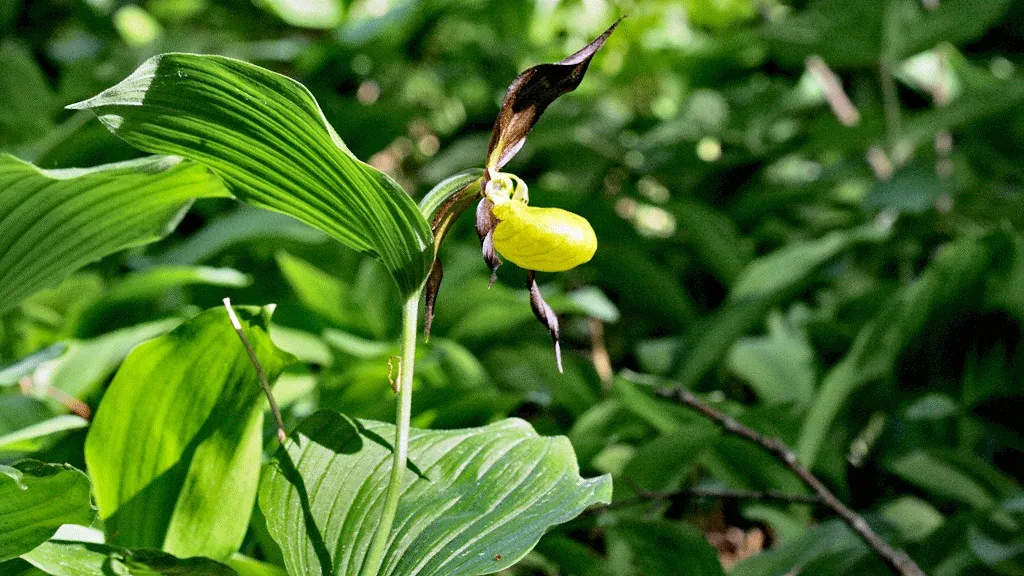
Among the old, crooked beech trees of Bjergeskoven hides one of Denmark’s rarest plants: Frueskoen.
This rare orchid thrives here because of the calcareous soil, which is so characteristic of Rold Skov’s geology. If you want to see its striking yellow flowers, you should plan your visit for early June, when it is usually in full bloom on the bright forest floor.
Please note that Frueskoen is extremely vulnerable and fully protected. It is therefore protected by a fence, allowing the few plants to survive undisturbed.
The history and legends of Rold Skov
Rold Skov is not only a natural area. The forest also holds stories of human life, work, fear and survival through time.
There was activity in the area as early as the Bronze Age. The landscape is scattered with burial mounds, and especially Svinehøjene and the 50 burial mounds at Rebild Bakker bear witness to early settlement.
In the 1800s, Rold Skov was so large and impenetrable that, according to the stories, it served as a refuge for outlaws. The tales of Røverne fra Rold are still a central part of local cultural history.
The forest also plays a role in more recent Danish history. Deep inside the area near Thingbæk Kalkminer lies Koldkrigsmuseet REGAN Vest. The bunker was built in the 1960s as a nuclear-secure facility for the Danish government and royal family. Today, REGAN Vest is a museum offering a unique insight into one of Denmark’s greatest secrets.
Activities in Rold Skov
Rold Skov offers many opportunities for outdoor activities all year round. You can hike along marked trails, cycle through the forest, visit lakes, springs and streams, or explore the forest’s many stories.
Hiking and running
There is a wide selection of marked routes in and around Rold Skov. Some are suitable for short walks, while others take you through larger parts of the landscape.
- Rebild Bakker Ruten, marked with white arrows, is Denmark’s first internationally recognised route.
- Gravlev Ådal Ruten, marked with red arrows, has been named one of Denmark’s hiking routes.
Cycling and mountain biking
Rold Skov is also a popular area for cyclists and mountain bikers. The forest contains some of Denmark’s best and most challenging mountain bike routes, including the well-known 24-timers MTB-rute.
Winter experiences
In winter, the hilly terrain and the forest’s geographical location provide good opportunities for skiing. The area is considered one of the best places for skiing in Denmark when the weather and snow conditions allow it.
Plan your visit to Rold Skov
If you want the best overview of experiences, routes and practical information in Rold Skov, you can find inspiration on RebildPorten’s website.
Here, we have gathered suggestions for hiking routes, cycle routes, attractions, nature sites and good stops along the way. You can read more about, among other things, Rebild Bakker, Rold Skov’s springs and lakes, Troldeskoven, hiking routes, mountain biking and other experiences in the area.
You are also welcome to use the Danish Nature Agency’s map of Rold Skov when planning your trip. The map gives you a good overview of the forest’s experiences and routes, making it easier to find what best suits your visit.


