Small Danish Hotels is now Stays. Only our name has changed. Everything else stays the same.
How to make a booking
Click the "See calendar and prices" button to choose dates and see the room selection.
See calendar and prices: Standard rateSmall Danish Hotels is now Stays. Only our name has changed. Everything else stays the same.
Includes per person per night:
Click the "See calendar and prices" button to choose dates and see the room selection.
See calendar and prices: Standard ratePinen 3, 7870 Roslev
Show map
Includes per person per night:
Includes per person per night:
3 days / 2 nights
Includes per person per stay:

1.24 km
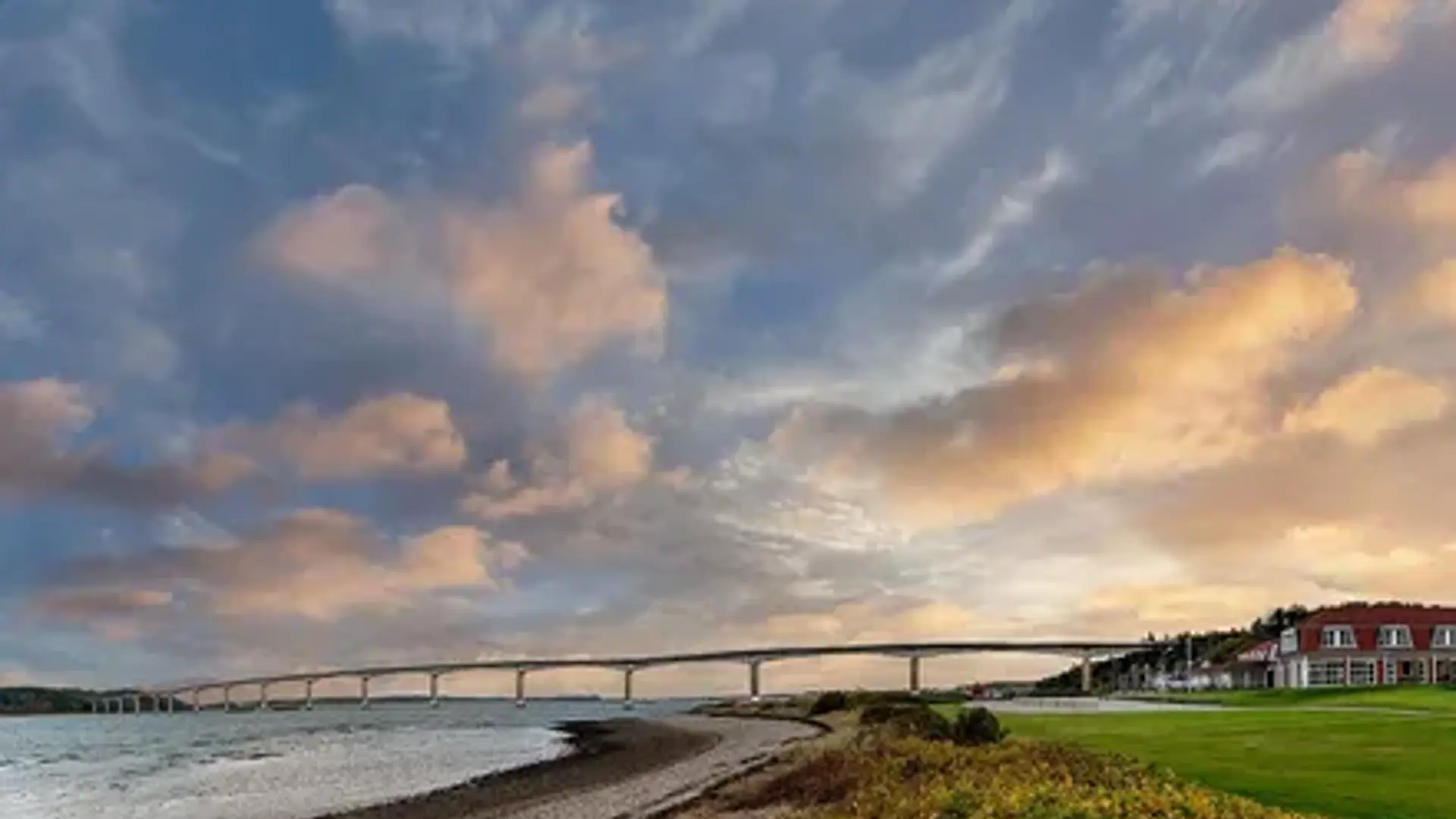
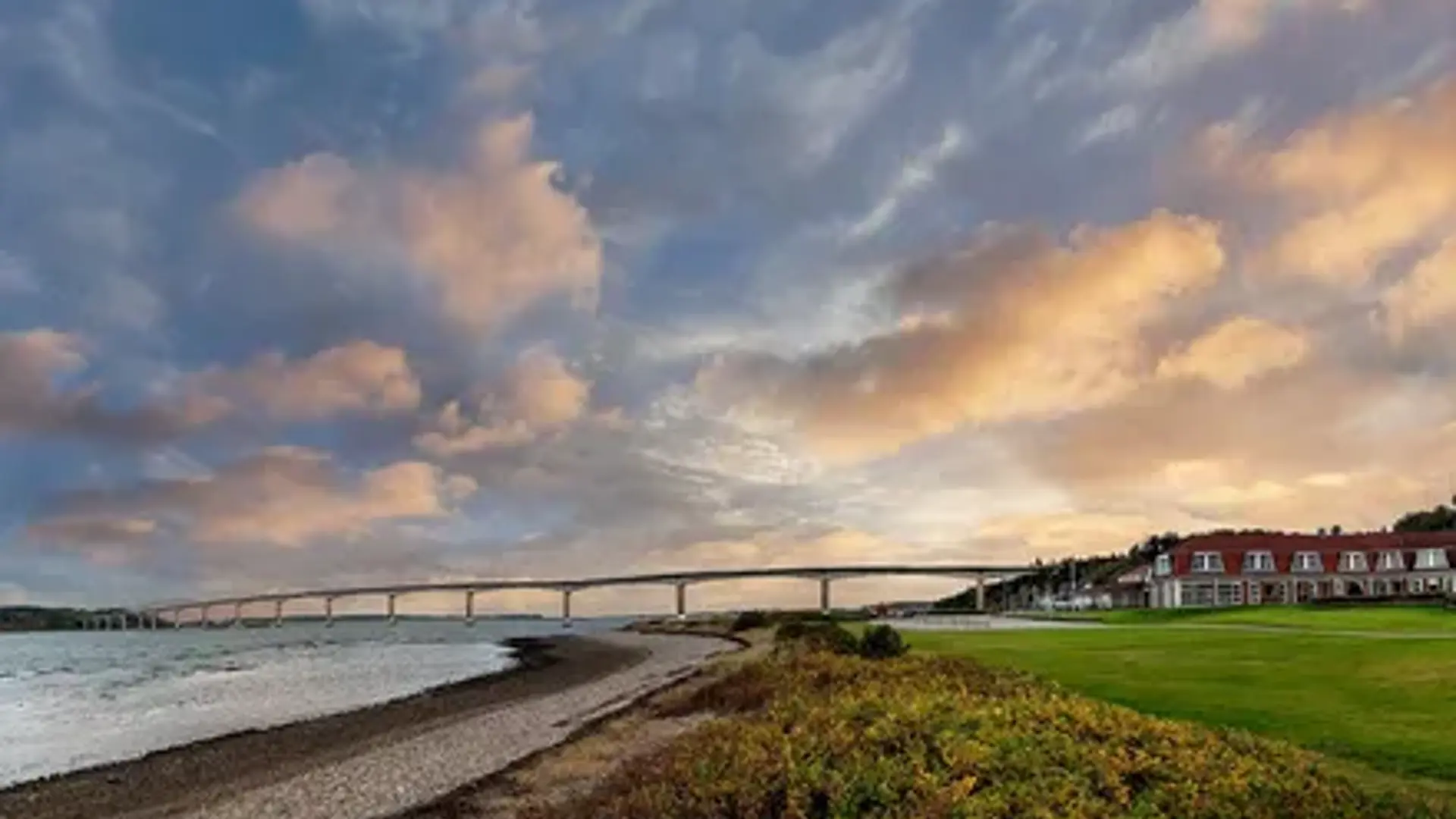
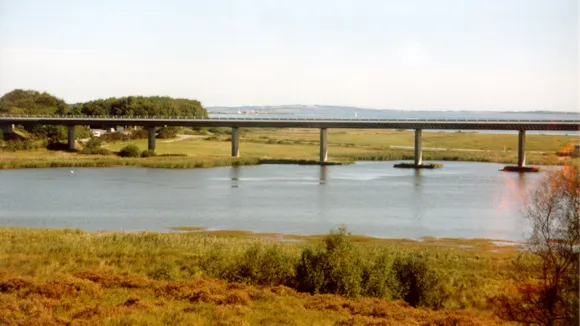
The bridge rises high above the water and stretches in a long, gentle arc across Sallingsund.
From here you move between regions while the fjord opens up beneath you.
Sallingsundbroen was built in 1978 and has a total length of 1,730 metres. The bridge is divided into 17 spans of 93 metres each, plus two end spans of 51 metres each.
The bridge's maximum height above the water is 30.5 metres, and the navigation clearance between the central pillars is 26 metres. The depth beneath the bridge is up to 15 metres.
The bridge deck is 16 metres wide and accommodates two lanes of traffic, two cycle paths and pavements. A sturdy railing and wind screens have been installed to ensure safety in the open and exposed location.
The construction required significant quantities of materials, including 12,000 m³ of concrete, 1,700 tonnes of reinforcement steel and 900 tonnes of prestressing reinforcement for the substructure.
Sallingsundbroen was inaugurated by Her Majesty Queen Margrethe II on 30 May 1978.
The wind screens reduce the view from the car, but on foot the landscape opens up. It is recommended to park at Legind Bjerge and walk out onto the bridge to experience the views across the fjord.
When was the bridge built?
- In 1978.
How long is the bridge?
- 1,730 metres.
Can you walk on the bridge?
- Yes, there are pavements along the bridge.
1.43 km
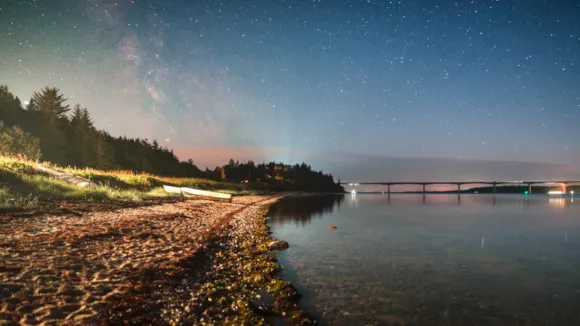
Right between the Legind forest and Limfjord you will find a big picnic area, which is great visiting for stargazing. The place fits perfectly for experiencing of shooting stars and the Milky Way that appears as a bright pillar in the Southern part of the sky from August till November. And you should definitely be here, when the year’s greatest Perseids meteor shower lights the night sky up with more than 100 shooting stars per hour!
In the pectin area you will find tables and benches that can freely be used if you would like to enjoy a hot drink with the heavenly view. The area is handicap friendly.
Well-adapted for experiencing: Milky Way, Meteor showers, Moonrise
Facilities: Tables, benches
Parking: Picnic/parking area under Sallingsund Bridge
Dark Sky in the Limfjord's country will take you on a time travel through billions of stars, offer an ease for your souls and non the less create lots of unforgettable memories of the fascinating night sky phenomena.
You can read more about Dark Sky in Destination Limfjorden here: Dark Sky in Destination Limfjorden
It is our common responsibility to respect natural environment, especially as many animal species are active during night time. It is important to switch the light off, when there is no need for using it – doing this will help you to avoid affecting your night vision and others in the area. Remember not to leave anything but your footprints out in the nature.
2.16 km
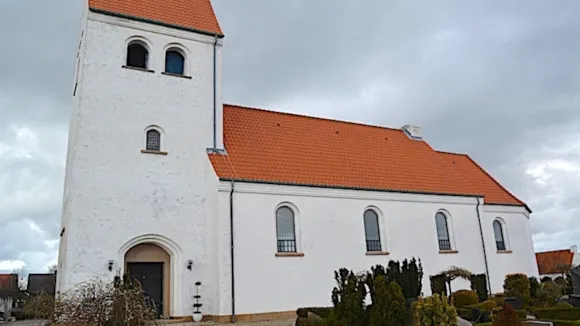
Glyngøre Church is the youngest church in Salling, yet its history is closely tied to the development of the area and the people who lived here. When the Skive-Salling railway reached its terminus in Glyngøre in 1884, and the ferry to Nykøbing Mors was established, a lively station town began to grow. With the town’s expansion came the need for a church – and it was inaugurated on April 13, 1919.
The church was designed by architect Charles Jensen from Brønderslev and built using bricks in the format of medieval monk stones. It consists of:
Chancel with a three-sided eastern end
Nave
Tower
Porch
Before the church was built, Glyngøre belonged to the parishes of Sæby and Nautrup. The local schoolteacher Jens Mikkelsen was the driving force behind the desire for a church – and his efforts became reality.
The church interior is simple and elegant:
The altarpiece depicts the Good Shepherd and was painted by Peter Skovgaard, son of the renowned artist Joakim Skovgaard. It was donated by district governor Howard Grøn from Viborg.
The granite baptismal font was donated by Mrs. Villefranche from Hellerup.
The church has both an old and a new churchyard. On the old churchyard stands a notable grave:
Fishmonger Peder Pedersen and his wife Ane Margrethe had offered a plot of land for a future church many years before it was built.
Peder Pedersen died before the church was constructed and was initially buried in Nautrup.
After the church was inaugurated, his coffin was secretly moved to Glyngøre, where his grave is now protected.
Northwest of the church stands a memorial stone for local sailors who lost their lives at sea during World War II.
The eastern part of the new churchyard has been arranged as a memorial garden, where gravestones from discontinued graves have been gathered and preserved.
2.3 km
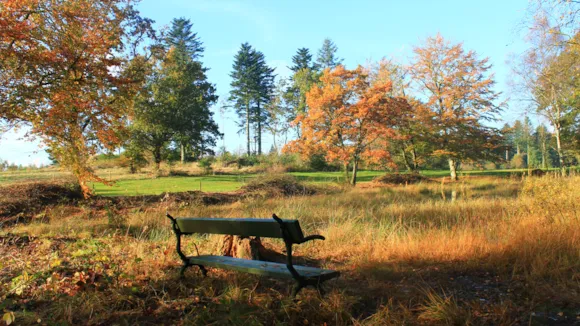
Legind Bjerge on Mors is one of the most striking and dramatic landscapes in Limfjordslandet.
Here the hills rise gently but powerfully, shaped by the enormous forces of the Ice Age, which left behind a rolling terrain of deep valleys and elevated viewpoints.
The area is part of the story of the Lost Land – a landscape that was shaped, altered and in some places disappeared beneath the movements of sea and ice.
Today Legind Bjerge is a peaceful natural area where forest, hills and open landscapes merge into one. Here the sky feels wide and the calm is tangible.
Paths wind through the area, giving you the opportunity to experience nature at your own pace – whether you prefer a quiet stroll or a longer hike.
From the higher points in the landscape, beautiful views open up over the Limfjord and the surrounding countryside.
It is a place where you stop. Breathe. And let your gaze wander.
Legind Bjerge is part of the larger geological area known as the Lost Land – a story of how Denmark's landscape has been shaped over thousands of years.
Here you can trace the marks left by the movement of ice and gain an understanding of how nature created the landscape we see today.
Area: Legind, Mors
Experiences: Hiking, nature and views
Target audience: Nature enthusiasts, hikers and families
What is Legind Bjerge?
- A rolling natural area on Mors, shaped by the Ice Age and part of the Lost Land.
Can you walk in the area?
- Yes, there are good paths and opportunities for both short and longer walks.
What makes the area special?
- The unique hilly landscape, the views and the geological history.
2.4 km
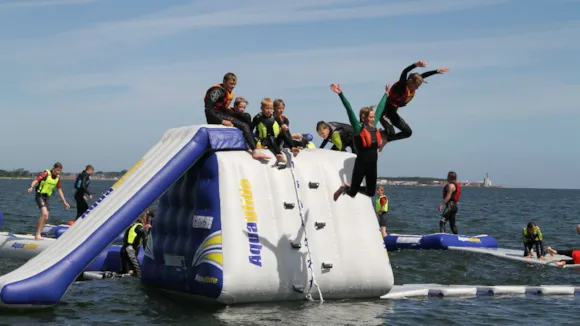
About 50 metres off the coast in Glyngøre you find the largest water playground in Scandinavia – complete with a water slide, bouncing castle, trampoline, climbing wall and balance training equipment.
The water around the playground is a couple of metres deep.
Children under the age of 12 must be accompanied by an adult and must be able to swim 400 metres. Safety jackets are mandatory.
Safety jackets and wetsuits are available free of charge at the shop SuperBrugsen against a deposit of DKK 300.-.
The Glyngøre Water Playground is open all summer till the end of August.
3 km
Jesperhus Blomsterpark offers experiences for the whole family.
Look forward to fun rides, colourful flowers, entertaining shows, exciting animals in the JungleZoo and loads of experiences – all in one place.
Jesperhus Blomsterpark is Scandinavia's largest flower park and one of Denmark's most popular attractions for families with children. Here a day full of fun activities, colourful flowers, exciting rides and entertainment for children awaits – all in one place.
Children can meet the well-known characters from the Jesperhus universe and enjoy entertaining shows at the amphitheatre stage Jesper Geds Hus, where music, dance and lots of fun for the whole family take place several times a day. Go exploring among thousands of flowers, impressive floral figures and beautiful themed gardens.
In Pirate Land you can try exciting rides, carousels and fun activities, while the large indoor JungleZoo offers experiences for the whole family. Get up close to the many animals, burn off energy in Hugo's Play Area or on
Dino's Jungle Trail, or experience one of Jesperhus's own films in the 4D cinema.
Jesperhus Blomsterpark is the perfect choice for a family holiday, a weekend trip or a fun day out. Here blooming surroundings are combined with exciting rides, play and entertainment for children, so both young and old come away with an experience they won't forget in a hurry.
At Jesperhus you'll also find activities such as bowling, mini golf, VR, Zik & Zak's Abeland and Hugo's Badeland. Just 500 metres from the flower park lies Jesperhus Feriepark, which has even more fun family activities.
Prices and further information at www.jesperhus.dk
What activities are available at Jesperhus Blomsterpark?
- Rides, JungleZoo, 4D cinema, shows and play areas both indoors and outdoors.
Is Jesperhus only for children?
- Jesperhus is aimed primarily at families with children, but has areas and activities for both children and adults.
Can you visit Jesperhus without staying there?
- Yes, the Flower Park is open to day visitors for a fee.
3.22 km
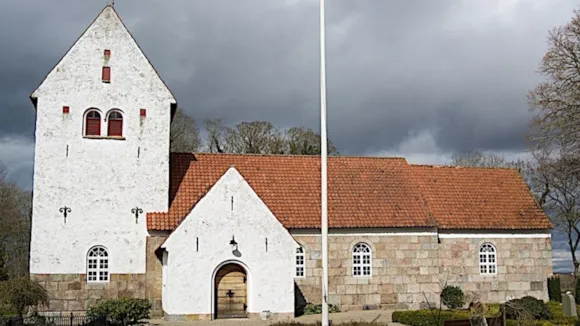
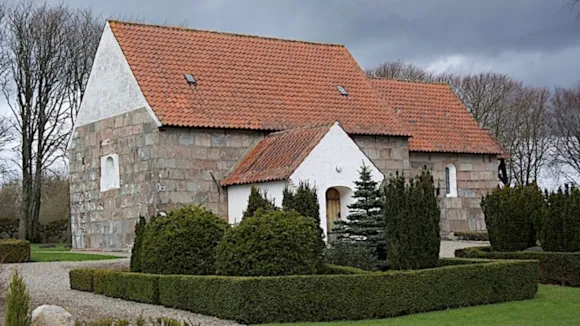
Nautrup Church is a Romanesque ashlar church consisting of a chancel and nave. In 1931, a tower and semicircular porch were added during a major and rather harsh restoration led by architect S. Vig Nielsen from Viborg. Most traces of the original details disappeared during this renovation. The church once had a tower, but it had vanished before 1750.
The granite altar table once held a lead capsule containing relics. The altarpiece dates from the early 1600s, with slightly younger painting. The crucifix in the central panel is from 1931.
The pulpit, with four corner columns, is from the same period as the altarpiece, though the virtue motifs in the arches were added later.
On the north wall hangs a Rococo-style epitaph for Alexander Basballe, who served as priest in Nautrup, Sæby, and Vile from 1715 to 1737. The plaque was installed by his daughter in 1755.
A small brass chandelier from the 18th century hangs in the nave, and a Romanesque gravestone with a carved cross is embedded in the west wall of the tower.
The church bell is believed to date from the first half of the 13th century.
In the southwest corner of the churchyard, a memorial area has been created using stones from discontinued graves. One notable stone is a large natural boulder raised in memory of Maren and Jens Jensen Grove – placed by a grateful donor whose education was funded by Jens Jensen Grove.
3.24 km
Legind Bjerge on Mors is one of the most striking landscapes in Limfjordslandet – but it is Legind Sø that gives the area its particular calm and depth.
In the middle of the hills, the lake lies like a mirror in the landscape, surrounded by forest and gentle slopes. Here the dramatic forms of the Ice Age meet an almost still, meditative atmosphere.
The area is part of the story of the Lost Land – a landscape shaped by ice, water and time.
Legind Sø is the heart of the area. Here the water is often perfectly calm, the sky reflected in the surface, while the forest stands close around the shore.
It is a place where you slow down entirely without thinking about it. Birds fill the air with sound, and the light changes with the hours of the day.
Along the lake you'll find paths that invite quiet walks, where you can get up close to nature.
The area around Legind Sø and Legind Bjerge is ideal for hiking. The paths wind through forest, up over hills and down towards the lake shore.
Here you get both viewpoints and intimate nature experiences – a variety that makes the area one of the best walking destinations on Mors.
Legind Bjerge and Legind Sø are part of the geological area known as the Lost LandHere you can experience how the ice shaped the landscape with hills, valleys and hollows – with the lake lying today as a clear trace of nature's work.
Area: Legind, Mors
Experiences: Lake, walks and nature
Target audience: Nature enthusiasts, hikers and families
What makes Legind Sø special?
- Its peaceful setting, the reflections in the water and the dense nature surrounding the lake.
Can you walk around the lake?
- Yes, there are good paths in the area that take you through the forest and along the lake shore.
What is Legind Bjerge known for?
- The rolling landscape shaped by the Ice Age and the beautiful views.
3.64 km
Sæby Church is a small, towerless Romanesque ashlar church consisting of a chancel and nave. At the east gable stands a bell frame with two bells – one dating from the 15th century and the other from 1996, hanging side by side as a beautiful symbol of past and present.
The church was restored in 1951, during which the porch was added and several original Romanesque windows were reopened. Both original portals are preserved, though the northern one is now bricked up.
Inside, the space is defined by a well-proportioned chancel arch with profiled corbels. The altar front, featuring paintings of Christ and Saint Peter, dates from 1656. The altarpiece is Renaissance, but the painting – created by Ingolf Røjbæk – was added in 1952. An older altar painting depicting the Last Supper also hangs in the church.
The pulpit dates from 1593, though its style appears older, in Late Gothic design. Two Gothic carved wooden figures, Christ and Saint Michael, were returned to the church in 1996 after being held by the National Museum.
5.74 km
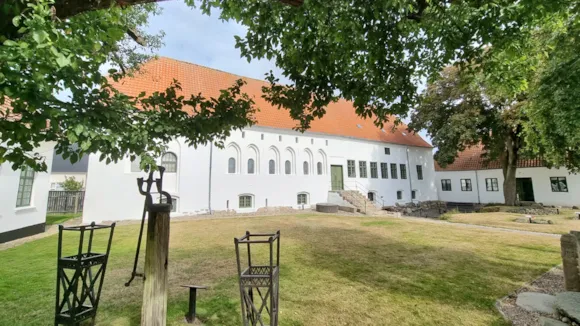
Experience the atmosphere in the old convent, which tells a story about monks and nuns, brave knights and fair maidens. See the many old and well-preserved items that generations of locals have protected and, thus, today are irreplaceable treasures in the museum’s collections.
Here you will find anything from the vikings’ sword to the finest China and glassware from our great-grandparents time. In other words, there’s something for everyone. The museum’s great collection of toys could easily be named Children’s Paradise. See every boy’s dream and every girl’s highest wish, and tell your own children or grandchildren about the time when their grandfather was a child.
There are many activities at the museum throughout the year. From special exhibitions to shows by people who demonstrate their skills for a day.
Dueholm Kloster is a part of the Museum Mors.
When you have paid the entrance fee you can visit Dansk Støberimuseum, Fossil- og Molermuseet og Skarregaard for free.
See opening hours for Dueholm Monastery on: Dueholm Monestery's webpage
6.63 km
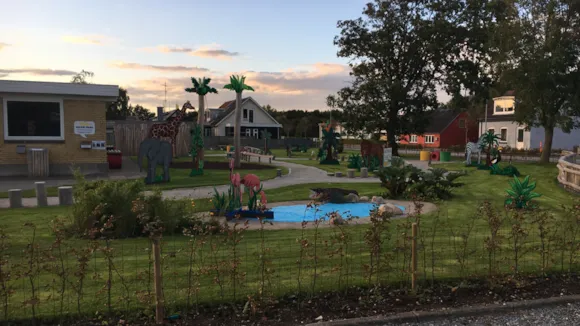
In Hama Safaripark in Nykøbing Mors, large bead figures stand together on the grass in front of the factory. Here you encounter animals, characters and motifs in colours that stand out clearly in the open space.
Hama Safaripark contains a collection of large figures made from Hama beads. The motifs depict, among other things, wild animals, trolls, teddy bears and other characters.
All are built on standard pegboards, the same kind used on a smaller scale at home.
From around 1 May to 15 October, the classic safari motifs are on display.
During the winter months they are replaced by seasonal motifs such as Halloween, winter, Christmas and Easter, with colours and shapes giving the area a different character.
The area is equipped with play equipment and picnic tables where visitors can take a break. Here you can sit with a packed lunch or a coffee while the figures stand around you on the grass.
You can get up close to the figures and take photos during your visit. Entry to Hama Safaripark is free, and visitors can take home a free postcard.
Hama Safaripark is located at Ringvejen 50 in Nykøbing Mors. Parking is available in the immediate vicinity of the park.
Hama products are developed with a focus on creativity and learning. They help children develop fine motor skills, recognise colours and work with shapes.
From as young as three years old, children can work with the beads, and the activities develop with age from play to more advanced creative expression.
What can you experience at Hama Safaripark?
- Large figures made from Hama beads, along with play and relaxation areas.
Is there an entry fee?
- No, entry to the park is free.
When can you visit the park?
- Figures are on display from May to October, with seasonal motifs during the winter months.
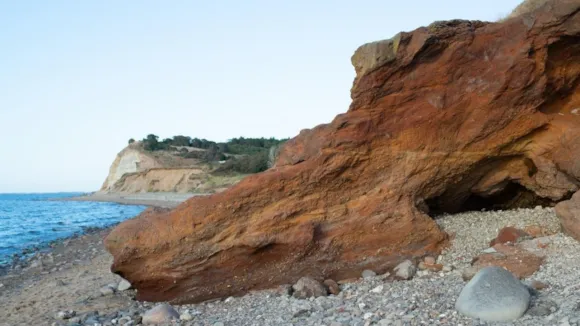
11.55 km
A large red cliff on Fur's north coast.
The red rock is a rust-red sandstone rock that stands out at the beach edge below the cliff. The red rock is always red because it is washed clean by the salty water, which further reinforces the rust content of the iron content in the surface.