Small Danish Hotels is now Stays. Only our name has changed. Everything else stays the same.
How to make a booking
Click the "See calendar and prices" button to choose dates and see the room selection.
See calendar and prices: Weekend staySmall Danish Hotels is now Stays. Only our name has changed. Everything else stays the same.

4.696937 of 5 Stars
Includes per person per stay:
Click the "See calendar and prices" button to choose dates and see the room selection.
See calendar and prices: Weekend stayHærvejen 25, 6330 Padborg
Show map
Includes per person per stay:
Minimum stay 3 days / 2 nights
Includes per person per night:
Includes per person per night:

Minimum 3 days / 2 nights
Includes per person per night:
Includes per person per night:
Min. 3 days/ 2 nights
Includes per person per night:
Includes per person per night:
0.35 km
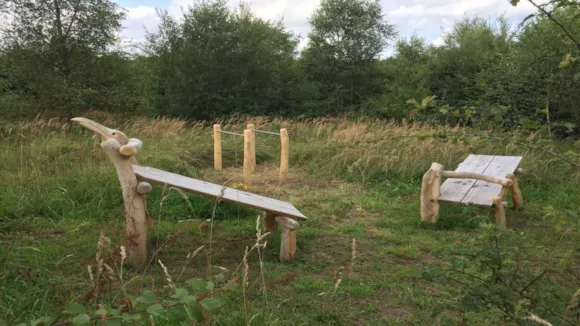
The Lyreskoven forest is located along the two roads Tøndervej and Omfartsvejen. Parking is possible coming from Tøndervej and there are also entrances coming from Smedeby, Omfartsvejen and Hærvejen. Take the dog for a walk, since part of the yellow route is in fact a designated dog forest. Both the Blue and Yellow route is suitable for the walking and the jogging type.
What you will find on your way along Lyreskovstien
On the route, you will find two fire places to be used freely and a hill commonly used for sledding during the winter or for exercise during the summer. There are also two lakes with shallow waters, which gives a clear view to study animal life in the water. In the forest Byskoven, there is a one-person bunker from the Second World War. The Historical Hærvejen makes its way through the area and is a part of Lyreskovstien.
Project Purpose of Lyreskovstien
The project aims to create an outdoor exercise and recreation area for all residents in the vicinity as well as Families with children, young people, elderly people, students and teachers from The Lyreskov School, Hærvej hikers and tourists. Tables, benches and exercise equipment will be built in natural materials along the Lyreskov Path.
Lyreskovstien as a route for excercising
The goal of Lyreskovstien as a route for exercising is to offer an outdoor gym as an alternative to the traditional gym experience. The tools must besides being fun to use, also be challenging and provide an opportunity to exercise everything from muscles to balance, rotation, coordination, agility, flexibility and endurance.
In The Lyreskov School, an outdoor exercise area with metal fitness equipment will be built to be freely available and will provide the opportunity to exercise at any time of the day without a gym membership.
Lyreskovstien as an excursion spot
Lyreskovstien should be a place with nice excursions for families with children, joggers, dog walkers and everyone who loves the natural environment’s beautiful scenery.
2.44 km
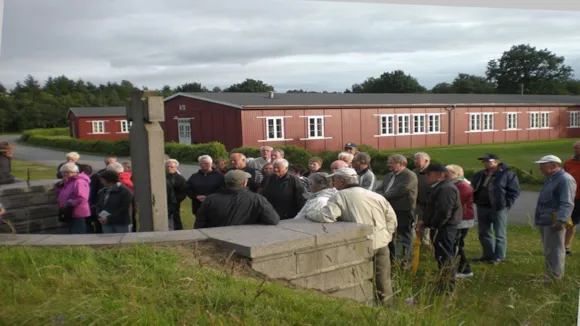
The self-governing institution "Hjemmeværnsmuseet" was established in 1988 in the historic Frøslev Camp and is a nationwide cultural-historical museum that houses the historical exhibition of the Home Guard.
The main idea behind the historical exhibition of the Home Guard is to describe the development of the Home Guard in relation to events in the surrounding world.
The exhibition is divided into four eras as follows: the first era is the 1940s with the establishment of the Home Guard, the second era is the 1950s with prosperity and progress, the third era covers the 1960s, 1970s, and 1980s with the Cold War, and the fourth era encompasses the 1990s and the future.
Spatially, the exhibition is divided accordingly, and in a small separate room called a "time machine," visitors will be introduced to the respective period through a description of characteristic and typical events and objects, including audio-visual means.
Since 1989, the Brigade Collection has been housed in the Hjemmeværnsmuseet and is an exhibition about the Danish Brigade DANFORCE, which was established and trained in Sweden from 1943 to 1945. The brigade, which reached about 5,000 volunteers, including 300 women, consisted mainly of Danish military personnel who were ordered or fled to Sweden, as well as resistance fighters and Jews who had to escape from Denmark. The brigade returned to Denmark on May 5, 1945, and subsequently carried out a wide range of guard duties, including at the Danish-German border.
Ongoing special exhibitions are held, shedding light on different periods or aspects of the Home Guard's existence. Lectures and guided tours of 1-2 hours can be arranged based on the nature of the visit. The content can be tailored to the participants' age, mobility, and developmental stage, covering Danish security and defense policy with an emphasis on the voluntary defense. The tour can be combined with visits to other military-historically significant attractions in Schleswig/Southern Jutland.
2.44 km
German Internment Camp 1944–1945
Frøslevlejren was built in 1944 during the German occupation of Denmark as a German internment camp. Several thousand Danes were imprisoned here as prisoners of the German Security Police.
Although the camp was established to prevent the deportation of Danish citizens to concentration camps in Germany, approximately 1,600 Frøslev prisoners were nevertheless deported to German concentration camps, contrary to all agreements.
Frøslevlejren is unique in a European context. The Germans accepted that the Danish prison authorities were responsible for providing food for the prisoners, and torture, violence, humiliation and executions were virtually non-existent in the camp.
Around 12,000 prisoners passed through Frøslevlejren during the nine months it existed.
Danish Internment and Penal Camp 1945–1949
From May 1945 until autumn 1949, the camp operated under the name Fårhuslejren (Fårhus Camp) as an internment and penal camp during the legal purge following the Second World War.
Fårhuslejren was the largest of the so-called “special penal camps for collaborators”. During the four and a half years of its operation, more than 5,000 people were imprisoned there for shorter or longer periods.
The Exhibitions
Frøslevlejrens Museum, part of the National Museum of Denmark, has three exhibition buildings:
In the main watchtower T1 and the former prisoner barrack H4, the story of Frøslevlejren 1944–1945 is presented.
Some rooms remain as they were, while others contain exhibitions about German surveillance of the camp, daily life of the prisoners, deportations to German concentration camps and the evacuation with the White Buses.
Barrack H6 presents the history of Fårhuslejren 1945–1949, with a special focus on the German minority in Sønderjylland, who were particularly affected by the post-war legal purge.
Also for Children and Young People
Allow 2–3 hours for your visit – preferably longer. There are several activities for children and young people, including an escape room where participants help prisoners attempt to escape. For younger children, there are engaging activities such as word and information hunts around the camp (ask at the ticket office for details).
You are welcome to bring a packed lunch, which can be enjoyed at the picnic tables on site. Ice cream, sweets and drinks can be purchased at the kiosk, where you will also find souvenirs – from books to posters and magnets.
If you are wearing hiking boots, do not miss the newly certified day route Frøslev-Poldestien. The trail runs directly through the camp and is available as a 6 km or 10 km route. It is known as a “Hærvej Pearl”, meaning it forms part of the historic Hærvej route.
Check the Calendar
Frøslevlejrens Museum / National Museum of Denmark hosts various guided tours, lectures and events throughout the year (except December and January). Tickets must be purchased separately from the entrance ticket (see the museum’s website). Annual passes are also available.
Free Museums
When visiting Frøslevlejren, you will find several free museums on the site, including the UN Museum and the Emergency Management Museum.
2.71 km
2.76 km
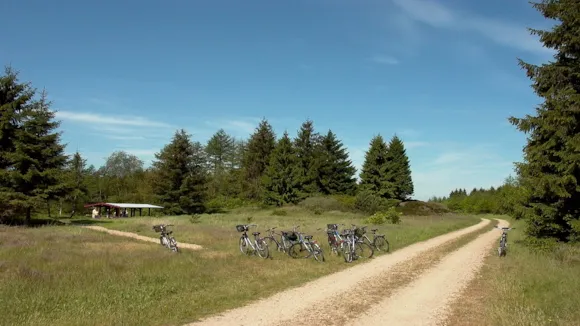
The path was made after Southern Jutland was returned to Denmark in 1920 and the route was used by the border gendarms on patrol.
11.54 km
In 1580, Duke Hans the Younger inherited large landed properties and the former Ryd Abbey from his uncle Hans the Older, however he is in need of a befitting accommodation on this side of the inlet Flensborg Fjord.
Hans the Younger gets the rest of the abbey removed and during the years 1583 - 87, a summer castle is built on the site, reusing some of the precious building materials from the abbey.
October 9 1622 Duke Hans the Younger dies during a stay at Glücksburg Castle. Another death at the castle within a noble house is Frederik the Seventh, who passes in the age of 55 on November 15 1863 - a few month later the War 1864 brakes out.
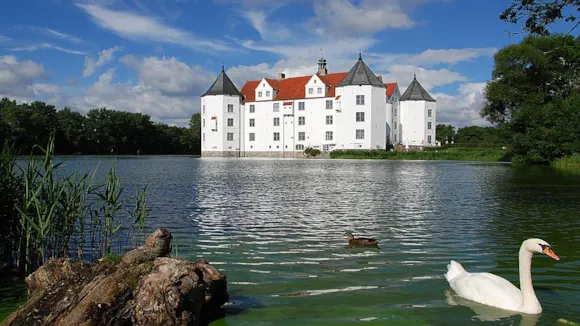
The beautiful white castle is a 3 storeyed square building with a tower in each corner. The castle is surrounded by an artificial lake. The large halls have vaulted ceilings and the castle is fitted with some of the most modern facilities at the time - garderobes. The garderobes are small outside bays with a toilet, discarding in the moat - where they also kept their fish!
The castle chapel is situated in one of the wings and was only used by the ducal family and their court. Later the chapel was used as a city church and today it is possible to get married in the chapel by appointment with the museum at Glücksburg Castle.
For more information and history - visit the website of the castle museum.
Glücksburg Castle
Großestr. 1
24960 Glücksburg
Germany
17.35 km
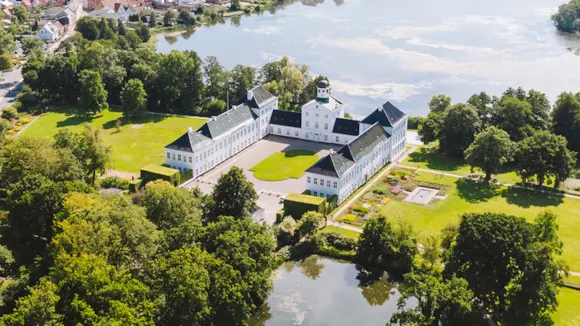
The very first palace in Graasten was a hunting and leisure palace built in the midst of the 16th century. After it burned down in 1603, a new palace was built, probably where the current palace´s south wing is now.
Shortly before 1700 the Chancellor Frederik Ahlefeldt built an impressive Baroque palace, which itself unfortunately burned down in 1757, only leaving the palace church. The current Graasten Palace, or rather the south wing, thus originates from 1759. In 1842 the main building was added.
In 1935 the right of use of the palace was given to the late King Frederik IX and Queen Ingrid. Queen Ingrid was very interested in flowers and stood for the planning of the garden at Graasten Palace until her death in 2000. The interest in flowers and the garden was continued by her daughter H.R.H. Queen Margrethe II.
There is no public access to the buildings and rooms of the palace and as Graasten Palace Church is being renovated, it is also closed to the public until spring 2027.
During the New Year's speech in 2023, HM Queen Margrethe II announced her abdication and on 14 January 2024, Denmark got a new king and queen in the form of King Frederik X and Queen Mary.
When the royal family is in residence at Graasten Palace, the area is closed to the public and there is no access to Graasten Palace Gardens and Church; The Palace Church will not be open for services and summer evening singing due to renovations.
Once there is an official announcement from the Royal House regarding this year's summer residence, the information will be added here.
Guard replacement
Once the palace is inhabited, a royal split flag goes to the top of the pole on the palace's bell tower and the Royal Life Guard sets up to guard. Every day there is a shift change of the Royal Life Guard. The guard starts from Det Gule Palæ, Ahlefeldtvej 5, where the new guard’s line up. Accompagniet by two tambours they march at 11.43 a.m. through Gråsten via Borggade, Torvet and Slotsgade to the palace, where the shift will take place at the guard house at 12.00. When King Frederik the X is in recidence, the march on Fridays is accompanied by the Royal Life Guards Tambour Corps and the changing of the guard takes place in the palace courtyard.
Fridays concerts
Will be held in the palace courtyard in connection with the changing of the guard during the royal couple's stay at the palace.
22.92 km
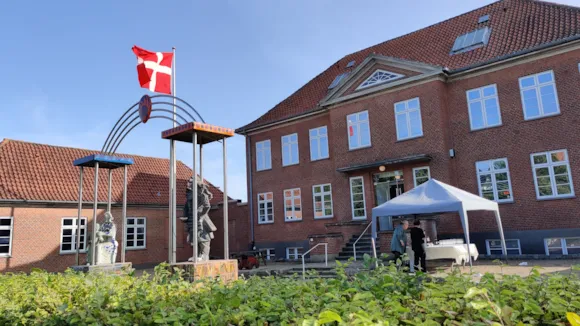
Set sail at Kulturhistorie Aabenraa – the town’s maritime museum. The museum reflects the proud seafaring tradition that shaped Aabenraa in the 18th and 19th centuries and later became an important part of the town’s identity. Learn about shipbuilding, shipyard history, and voyages that sailed to distant shores in Asia, America, Australia, and Africa.
Here you can experience one of Denmark’s largest collections of ship portraits, which once hung in captains’ homes, see a furnished captain’s parlour, discover the treasures and souvenirs that sailors brought back to Aabenraa, and read about the fates of those who went to sea – and perhaps, perhaps did not return home.
In the basement, there are activities for the youngest visitors, where you can, for example, draw your own maritime portrait.
The museum also has a small souvenir and museum shop where you can buy everything from postcards and books to lovely souvenirs as a memento of your visit to Kulturhistorie Aabenraa.
Opening hours:
The museum is closed during the winter and will reopen and opens again on March 26th 2026.
Don't forget to visit the museum om March 28th 2026, where entrance is free for everyone.
Regular opening hours will then be Thursday – Sunday: 12.00–4.00 pm.
26.08 km
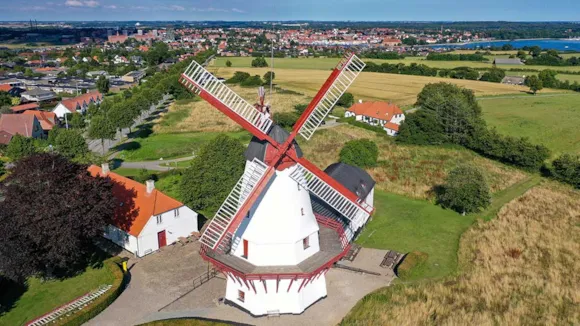
Dybbøl Mølle is one of Denmark's most important national symbols. During the war of 1864, it became the symbol of the bravery of the Danish soldiers on the battlefield, and in the period 1864-1920 the symbol of the struggle of the Danish-minded southern Jutlanders under German rule. At the same time, it was a completely ordinary mill, which was run until 1990.
Today, the mill is a museum. On the ground floor of the grain magazine, there is an exhibition about the history of the mill 1744-2020. Here you can learn more about the influence of the two Schleswig Wars on the mill and about the family who lived there at the time. On the magazine loft, you will find an exhibition about Dybbøl as a symbol and about the many national celebrations - both Danish and German - that have taken place at Dybbøl Banke.
In the mill tower, you can see the old grinders and the big spur wheel. Afterwards you can go out on to the gallery and enjoy the beautiful view of Dybbøl Banke, Sønderborg and Vemmingbund.
If you want to visit both Dybbøl Mølle and the history centre, Historiecenter Dybbøl Banke, an online combi-ticket is available from 1 April to 31 October 2025, where you save DKK 11.00 for children aged 5-15 years and DKK 21.00 for guests from the age of 16.
27.65 km
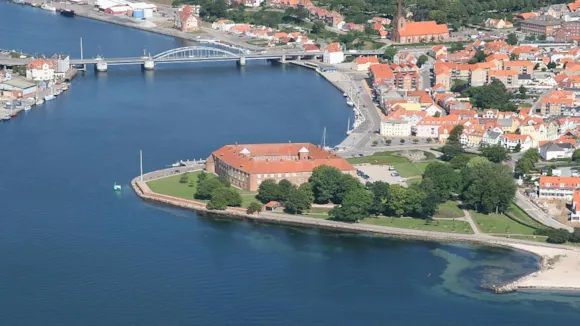
The castle was founded before 1200 and was from 1550-70 rebuilt into a four wing Renaissance castle.
The museum tells about the history of North Slesvig from the Middle Ages to the present with the main focus on the wars of 1848-50, 1864, 1914-18, the plebiscite and the reunification of North Slesvig with Denmark in 1920.
Large culture-historical collections with furniture, textiles, crafts and art from North Slesvig.
Openinghours: See "The Museum on Sønderborg Castle"
28.03 km
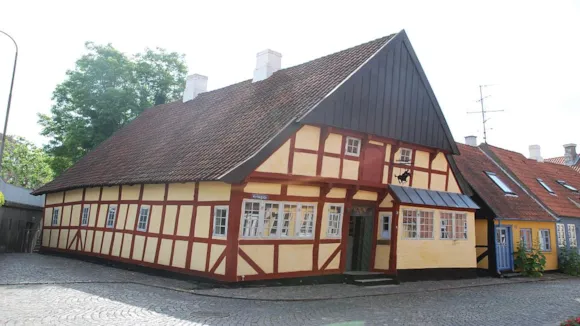
Lean about the history og Tilting-the-Ring, see the president lances, the saddles and the reins, the beautiful trophies, the Lances of honour and the painting "Tilting Parade" by Fritz Carstensen.
Visit the Medal Corridor, the Protocol Room and the Document Room, where you can see different medals and ribbons and see who have won the titles of king, Crown Prince and Prince throughout the years.
The museum is open 2 days of the week from June to and incl. August as well as Friday, Saturday and Sunday in the weekend of the Tilting-at-the-Ring festival in Sønderborg City.
Groups all year after appointment with Hans Ove Jensen tel. (+45) 24 21 00 01.
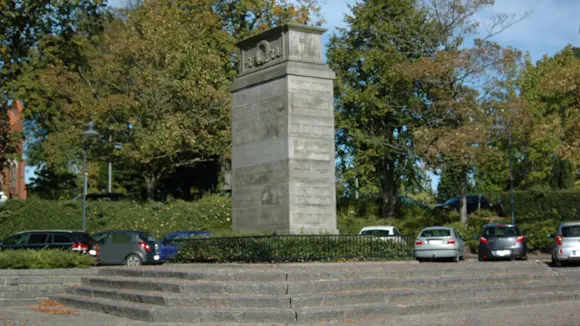
28.12 km
The memorial stone on Kirketorvet was sketched by the architect Thomas Havning (1891-1976) and erected in 1923.
There are 192 names, German as well as Danish, all fallen in 1. WW (1914-18). Notice the top of stone which is similar to a sarcophagus.
Each year at the time of conclusion of peace – the 11. November at 11 am – wreaths are placed at the memorial stone.