Small Danish Hotels is now Stays. Only our name has changed. Everything else stays the same.
How to make a booking
Click the "See calendar and prices" button to choose dates and see the room selection.
See calendar and prices: FX-Rate PlanSmall Danish Hotels is now Stays. Only our name has changed. Everything else stays the same.

Green Key approved
Click the "See calendar and prices" button to choose dates and see the room selection.
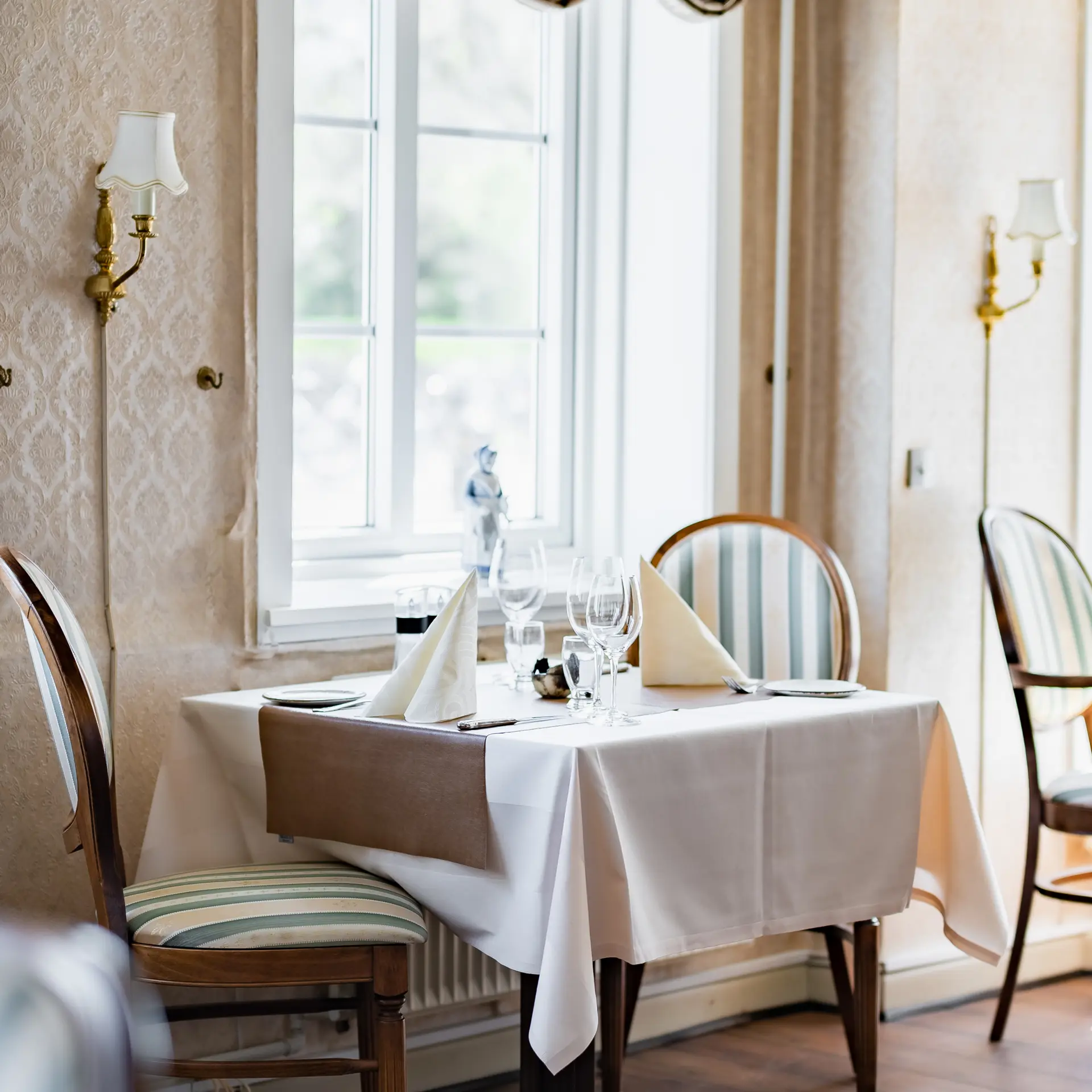
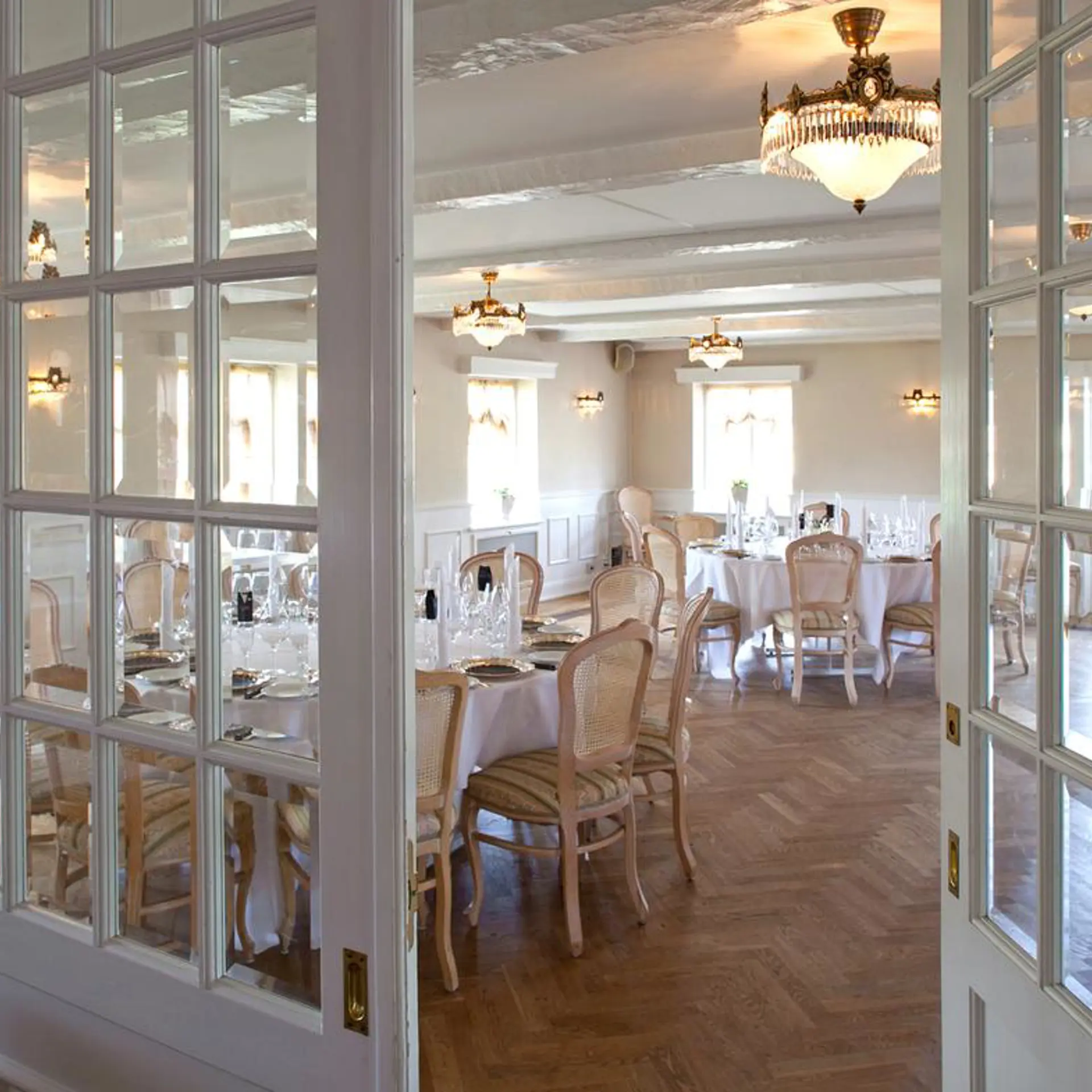
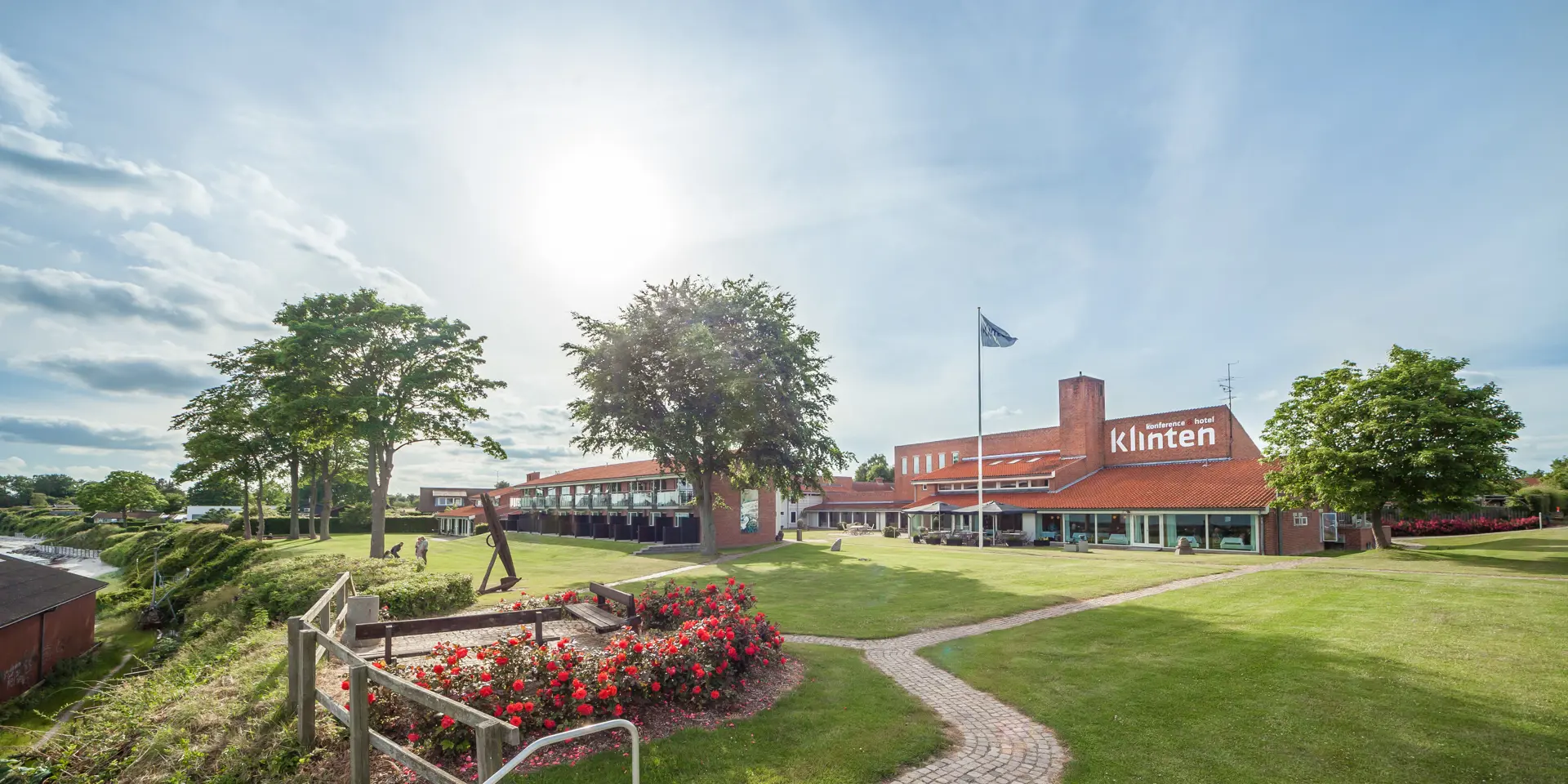
See calendar and prices: FX-Rate PlanStrandhotel Klinten is beautifully located in Rødvig at the foot of Stevns Klint, with direct access to both the harbour and the beach. The hotel offers Nordic architecture, sea views, and peaceful surroundings.
Søndervej 8, 4673 Rødvig Stevns
Show map
2.09 km
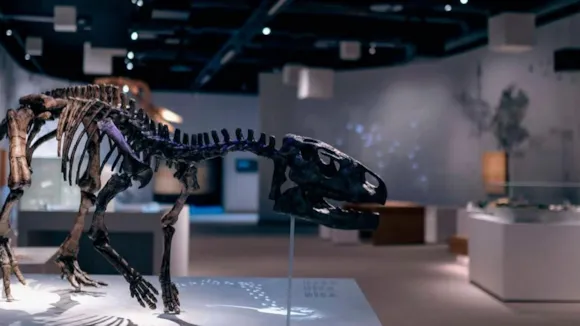
Stevns Klint Experience is more than a museum. It is a visitor centre where one of Earth’s great turning points becomes vivid and easy to understand. Here, you step into the story of the asteroid impact that changed life on Earth forever. Right here at Stevns Klint, some of the world’s most important traces of that event can still be found. That is one of the reasons why Stevns Klint is listed as a UNESCO World Heritage Site. The centre is located in Boesdal Quarry with views of the striking landscape and the Baltic Sea, so the story continues naturally when you step outside.
At Stevns Klint Experience, both children and adults can explore an interactive exhibition about the time before, during, and after the impact. You can see dinosaur skeletons, meteorites, fossils, and interactive games that make the story engaging and easier to understand. In the centre’s cinema, the narrative comes to life in a new way, and the exhibition also introduces you to a small marsupial-like mammal that is seen as an early ancestor of the mammals that later came to shape life on Earth. This makes the place a great choice for curious adults, families with children, and anyone who wants to feel close to natural history rather than just read about it.
One of the most fascinating things about Stevns Klint Experience is that this dramatic story does not feel distant. It feels real because the evidence is right here. The meteor struck the Yucatán Peninsula in present-day Mexico with such force that the world was thrown into chaos. The seas rose, ash clouds blocked out the sun, and living conditions changed so suddenly that the dinosaurs disappeared. At Stevns Klint, you can see the thin layer of fish clay between chalk and limestone. This layer is one of the clearest pieces of evidence of what actually happened 66 million years ago and marks the transition between two geological eras. It is the kind of place where you suddenly feel how small we are, and how immense the story beneath our feet can be.
Yes, Stevns Klint Experience is a great place for children, especially if dinosaurs, mysteries, and dramatic stories from the natural world are high on the list. The exhibition is designed so you do not just read your way through history. You experience it through rooms, objects, and interactive elements. That makes it well suited to families, grandparents with grandchildren, and school-age children who want to understand complex stories in a lively and accessible way. At the same time, there is plenty for adults to explore too, so the visit works well across age groups.
What makes a visit here special is the connection between the visitor centre and the landscape. First, the story unfolds inside Stevns Klint Experience, and then you can step outside and see the area with new eyes. Suddenly, Stevns Klint is not just a beautiful cliff. It becomes a place where the traces of a global catastrophe can still be read in the rock today. That combination of insight and scenery makes the visit memorable.
2.76 km
FORT is located right by Stevns Klint, where Denmark had one of its most important positions facing east during the Cold War. From here, military personnel monitored ship traffic through the Øresund and stood ready if tensions between East and West were to escalate. That is what makes FORT much more than a museum. It is a place where you can sense how closely world politics once touched everyday life in Denmark.
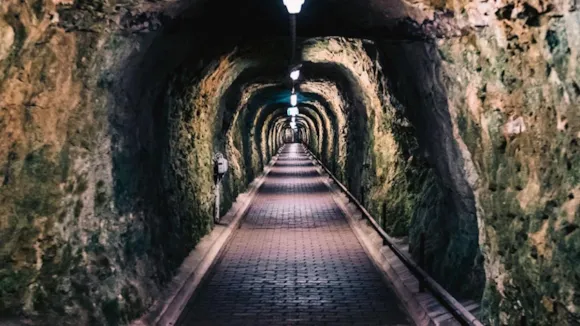
What makes FORT special is that the site still feels remarkably close to how it was when it was active. Beneath the ground, long tunnels run through the limestone, while above ground you can still see the traces of a defence facility built in a time when peace was never taken for granted. The story is not tucked away behind glass cases. It lives in the rooms, the equipment and the silence beneath the cliff. FORT is well suited to adults, history enthusiasts, curious teenagers and families with older children who want an experience with both atmosphere and depth.
FORT was built as a strategic part of Denmark’s and NATO’s defence system. Its location made it possible to monitor traffic through the Øresund and respond quickly if hostile forces approached. The fort was staffed and ready around the clock for decades. Beneath the cliff were operations rooms, crew facilities and long connecting tunnels, while above ground there were cannons, radar and later also an authentic HAWK missile unit.
Everything was designed with one purpose: to be ready if war came. That is exactly why FORT offers such a gripping look into a part of Danish history that once unfolded largely out of sight. Here, people stood watch, tracked movement at sea and worked in a facility built for a worst-case scenario. That very seriousness gives the visit its particular intensity. You are not simply walking through a museum. You are stepping into a place where preparedness was part of daily life.
In the early 1950s, the fort was built as an important defence position at the Øresund.
Throughout the Cold War, FORT served as a surveillance and readiness facility and as part of Denmark’s and NATO’s front line.
Later, the site was expanded with more advanced technology and stronger monitoring systems.
Around the turn of the millennium, the military presence ended, and the site remained as a rare and well-preserved testimony to that period.
Today, FORT can be experienced as a museum with guided tours, underground tunnels and authentic installations.
The most striking part of a visit is the journey down into the fort’s underground world. Here, you move through around 1.7 kilometres of tunnels cut directly into the limestone beneath Stevns Klint. Even on the way down, the atmosphere changes. The light feels different, sounds are softened, and it becomes easy to imagine the focus that once filled this place while the world above ground held its breath.
On a guided tour, you can explore the underground rooms, hear stories about daily life at the fort and get close to both major world events and smaller human details. Above ground, cannons, military installations and the American HAWK missile unit make the story even more tangible. It is the kind of place where both children and adults often leave with more questions than they had when they arrived.
A visit can easily be combined with other experiences in the area. You can also explore Stevns Klint and stop by Højerup Old Church if you want a day that combines nature, views and memorable stories.
FORT also holds the stories that stay with you long after your visit. One of the best known is about target practice towards Sweden. The fort’s cannons had such long range that, with the right wind, the right angle and the right elevation, they could come uncomfortably close to Falsterbo Lighthouse. And that is exactly what happened.
According to the story, one test shot came so close to the lighthouse that doors and windows were blown open and the staff were knocked off their feet. No one was seriously hurt, but the reaction on the Swedish side was said to be rather direct. It is one of those stories that is a little wild, a little funny and very telling of a period when gravity and absurdity often stood side by side.
FORT officially belonged to the Royal Danish Navy, even though it is located on land. That is why maritime terms were used and personnel wore the Navy’s blue uniforms.
The underground operations room was fitted with surprisingly advanced technology and included systems that today can seem like early forerunners of digital networking.
Warsaw Pact ships had suspiciously frequent “engine trouble” outside the fort, allowing them to remain in the area and listen in on radio communications.
5.3 km
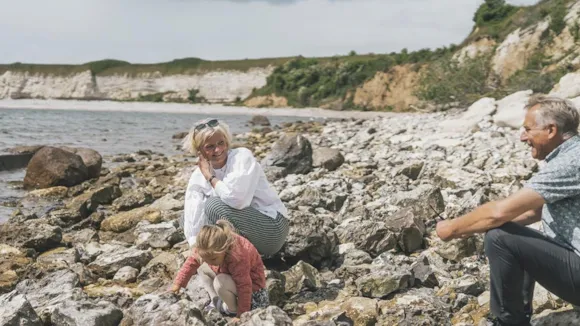
Stevns Klint is a place where nature, history and big stories meet right at the water’s edge. Here, the cliff rises more than 40 metres above the sea and stretches for around 20 kilometres along the coast. This is where you can stand face to face with some of the clearest traces from the time when an asteroid impact changed life on Earth and wiped out the dinosaurs along with more than half of all species. At the same time, the cliff holds layers from a distant past, when Denmark lay beneath a tropical sea.
Stevns Klint is not only beautiful to look at. It is also internationally important because the layers in the cliff reveal the transition between life before and after the catastrophe that struck Earth around 66 million years ago. The thin fish clay layer is one of the key pieces of evidence and makes Stevns Klint a unique place for both researchers and visitors who want to understand what happened when the world changed dramatically. It is the kind of experience that stays with you, even if geology is not usually your thing.
What makes Stevns Klint special is that the experience feels both vast and close at hand. You get wide sea views, bright cliffs with clearly visible layers and the feeling of standing in the middle of a story far bigger than yourself. On clear days, the landscape can seem almost calm, yet just beneath the surface lie traces of violent change and the return of life. That contrast is exactly what makes Stevns Klint so compelling. You can easily combine your visit with Højerup Old Church or Stevns Fyrcenter if you want to explore more of the area along the cliff edge.
Right beside the cliff, you will find Stevns Klint Experience, a visitor centre where you can learn more about life before, during and after the asteroid that struck Earth. The exhibitions make the story easier to grasp for both children and adults and add an extra layer to your visit to Stevns Klint, especially if you want to understand why this place attracts such attention from around the world.
Yes, Stevns Klint is a great choice for families with curious children, for adults with an interest in nature and history, and for anyone who likes places with both views and substance. There is plenty of room to explore, ask questions and let the imagination wander a little. For some, it is the scenery and the fresh sea air that draw them in. For others, it is the story of the dinosaurs’ extinction, the fossils and the feeling of looking straight into the Earth’s own history book.
Stevns Klint is made up of four layers: soft chalk at the bottom, then fish clay, then hard limestone and, at the top, traces from the last Ice Age.
Bryozoan limestone from the cliff was once cut out and used as a building material. The stone is also known as limsten.
The cliff is around 66 to 71 million years old.
6.59 km
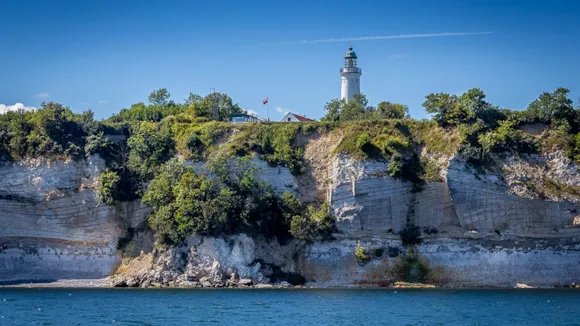
The lighthouse of Stevns is a unique, historical monument. It is 27 m. high and situated at the eged of the Cliff of Stevns, 42 m. above the see.
It offers a magnificent view og the flat, cultural landscape of Stevns, of military installations from the Cold War period and of the Baltic sea with the entrance to the South and Sweden.
The orginal Lighthouse of Stevns dates back from 1818. At that time it was the most modern of Europe.
The building in which the lighthouse was situated may still be seen.
In 1878, next to the orginal Lighthouse of Stevns, a 27 meter-high, detached lighthouse was constructed in limestone, cut out of the Cliff of Stevns by farmworkers of Gjorslev.
15.68 km
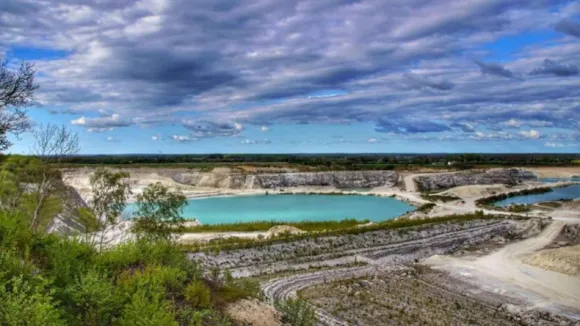
KALK sits right inside Faxe Limestone Quarry, and that’s exactly why it feels different from a classic museum visit. You’re standing in the landscape where the story happened, not just reading about it afterwards. Inside, the exhibitions give you the bigger picture of the ancient sea that once covered the area. Outside, the quarry invites you to look for traces of that world yourself, with the kind of hands-on curiosity that quickly takes over the day.
Your ticket gives access to both the exhibitions and fossil hunting, so you can move between learning and exploring whenever it suits you. In the quarry you can hire tools like a hammer and chisel, and if you make a find, you can get help identifying it. That support makes it easy to get started, even if it’s your first time on a fossil hunt. And there’s a special thrill in cracking open a piece of limestone and spotting something that hasn’t seen daylight for millions of years.
Fossils are hidden in the limestone layers, and with a bit of luck you might uncover things like shark teeth, crabs, sea urchins or shells. Some finds are tiny and delicate, others more solid, but they all make deep time feel surprisingly close. One moment you’re just looking for the right stone, and the next you’re holding a small piece of ancient life in your hand.
Faxe Limestone Quarry contains the world’s oldest known deep-sea coral reef. That means you’re exploring an environment that once teemed with life far below the surface of the sea. The exhibitions at KALK help put your discoveries into context, so what you find outside becomes more than a souvenir. It becomes part of a much bigger story about the reef, the sea and the creatures that lived here long before humans arrived.
Yes, it’s a great day out for families. There’s room for complete beginners as well as anyone who wants to dive into the details. The exhibitions are a good starting point, and out in the quarry fossil hunting quickly turns into a shared mission, with everyone scanning for the next promising piece of limestone. Ideal if you want fresh air, hands-on activity and a story to bring home.
If you’d like to combine your visit with more experiences nearby, find ideas on Destination Faxe and browse more options via This is where quality time begins.
15.88 km
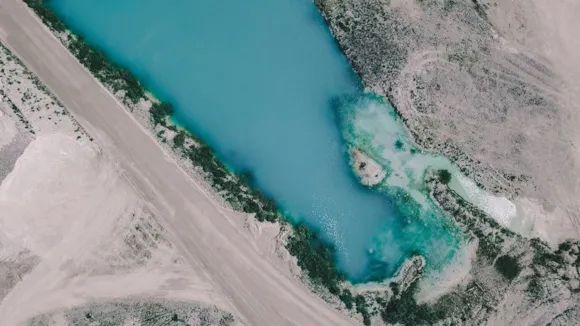
Faxe Kalkbrud is a place that almost feels unreal at first sight. The bright chalk walls, blue-green lakes and wide-open landscape create the feeling of standing in the middle of something both raw, quiet and incredibly old. Here, you move across a seabed that was formed around 63 million years ago, in the period when the dinosaurs were living their final years. Back then, giant sharks, crocodiles and other sea creatures swam here, and traces of them are still hidden in the chalk today.
What makes Faxe Kalkbrud special is the way nature, geology and curiosity come together. You do not come here only to look around. You come to search, discover and perhaps feel that little thrill when something in the stone suddenly looks like a tooth, a coral or part of an animal from a distant past. It is an experience for anyone who enjoys nature with a little more history in its layers.
Fossil hunting is one of the biggest experiences at Faxe Kalkbrud. Here, you can search for shark teeth, corals, crab shells, mussels and belemnites, and one of the best parts is that you are allowed to take your finds home with you. That makes the visit even more exciting, because you may actually leave with a small piece of prehistory in your pocket.
At the edge of the quarry, you will find KALK, which arranges guided fossil hunts and shares the story of the area and its many remarkable discoveries. You can also rent a hammer and chisel here if you want to get a little closer to the chalk. If you find something interesting, nature guides can help assess your find, so the experience becomes not only fun, but also more insightful.
At the edge of Faxe Kalkbrud lies Prismet, a viewing platform shaped like a prism. From here, the landscape opens up and gives you a great overview of the quarry, the lakes and the striking contrast between white chalk and turquoise water. It is a good place to pause, take a slower breath and let your eyes wander. Visiting both Faxe Kalkbrud and Prismet is free of charge, and the view is an experience in itself.
Faxe Kalkbrud is a fantastic attraction, but it is also a working site. If you visit the quarry on a weekday, there will be noticeably more noise and large machinery in the area than if you visit at the weekend.
It may seem tempting to take a swim in the azure-blue water at Faxe Kalkbrud, but it is very strongly discouraged. The chalk makes the water alkaline, which can cause skin irritation, and the lakes are so deep that there are major temperature changes, which can lead to cold shock.
Faxe Kalkbrud is often used for film productions. Several scenes from the Christmas calendar series "Jesus & Josefine" were filmed here. The quarry is also a popular location for professional photo shoots because of the special light, the azure-blue water and the almost desert-like landscape.
Faxe Kalkbrud is a great match for curious nature lovers, fossil hunters and anyone who wants to experience a landscape that feels very different from what many people usually associate with Denmark. Some come for the views, others for the quiet, and many for the excitement of finding a fossil they can take home. It is also a wonderful place for anyone who likes to combine fresh air with new knowledge and an experience that sparks the imagination.
Nearby, you can also combine your visit with more nature experiences such as Stevns Klint and Stevns Klint Trampesti.
25.07 km
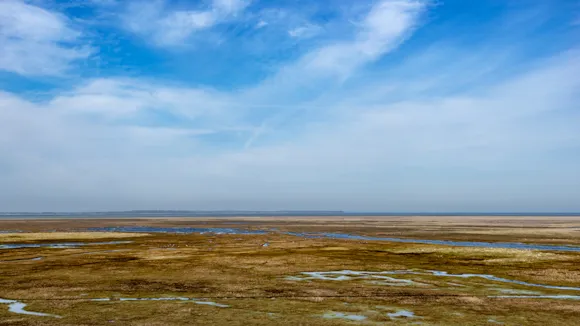
Nyord is about 5 km2 in size and consists of about 120 hectares of moraine soil where Nyord Town and the farmland are located. In addition, the island consists of 400 hectares of beach meadows, which are flooded with salt water every winter and grazed in summer. The meadows are home to a very rich plant and bird life and is known as one of the best habitats for wading and swimming birds in Denmark.
Bird life can be studied from the bird tower by the road, in the middle of the meadows. You can also visit Hyldevang Nature Center, Nyord's only relocation farm, which is now owned by the Forest and the Danish Nature Agency. Here you will find a bonfire hut, shelters, a sensory garden and a handicap-friendly viewpoint over the meadows.
11.06 km
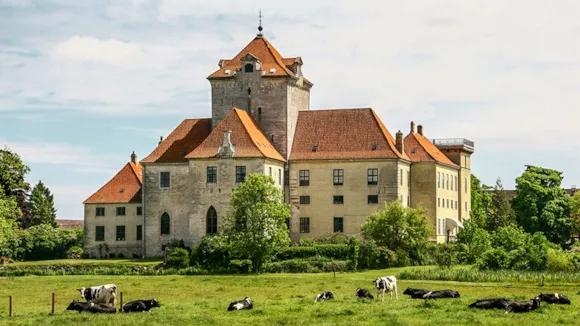
At Gjorslev, there are stories about kings and queens, about nobility - and those who became it, about farmers and other common people, about ghosts and legends. Visit the castle on tours, for activities and major events and experience the thick limestone walls tell their story all the way back to the time when Margrete 1st sat on the throne.
Brief history of Gjorslev
Gjorslev Castle was built as a bishop's fortress in 1396 by Peder Jensen Lodehat. He was bishop of Roskilde, Margrete 1sts trusted advisor and Chancellor of State. The two were, among other things, the forces behind the Kalmar Union.
The castle remained in the possession of the Bishop of Roskilde until the Reformation, and thereafter the estate changed hands between noble families, merchants and the royal house until 1925, when the estate was bought by Adolf Valdemar Tesdorf, who is the great-grandfather of the current owner.
The original cross-shaped fortress, built in local limestone, is still the main building of Gjorslev Castle. Over time it has undergone renovations in different styles and received two additions, colloquially known as the south wing and the north wing.
Your experience
It is possible to visit Gjorslev Castle for planned activities. Join us for guided tours, holiday activities, exclusive cultural evenings or book your own experience.
Every year Gjorslev Estate is part of “Herregårdenes Dag” (Manor Day) on the 3rd Sunday in August, where Bredgade, the courtyard and the castle park are filled with market stalls, culture and activities.
You are always welcome to visit the castle park, where there is free access.
Gjorslev Gods today
When you visit the castle with a ticket in hand, you will walk through the listed street Bredgade up to the castle courtyard, but you will also enter a working farm and get close to private residences. Gjorslev Estate is still run as it always has been – with agriculture, forestry, hunting and rental housing. Therefore, respect the signage in the area and avoid exploring on your own, even if you are curious.
19.24 km
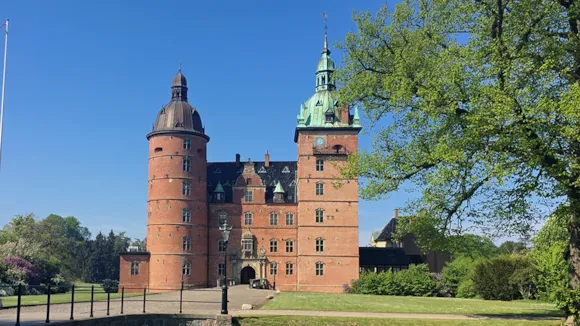
The beautiful and majestic castle is in a big forest belonging to the estate. This historical monument is still a great and pompous castle, where noble women with roots in the old noble Danish families can live. The history of the castle is known from the 13th century. The building of the castle was finished in 1586 by Mette Rosenkrantz, with the addition of a west and south wing and the two characteristic towers. The other wings were built in the 16th and 17th century. In 1893 the castle burnt down, but the outer walls resisted the fire and were used in the rebuilding. During the years between 1894- 1904 the castle was rebuilt.
The estate was owned by the well known noble families until 1708. In 1708 it was bought by Frederik IV, who gave it to his mistress, later she became queen Anna Sophie Reventlow. After the death of the king in 1730 Anna Sophie was banished to Clausholm and the new King Christian VI gave Valloe Estate to his queen Sophie Magdalene.
The queen founded on the 28th November 1737 Valloe Trust, as a self governing institution. The original trusts purpose was to support unmarried daughters of Danish noble family’s if they were enrolled in the trust. The ladys lived in flats in the castle and were expected to do social work in the surrounding area. In 1976 the possibility of enrollment ceased, but in 2004 the Valloe foundation resumed the enrollment of noble damsels.
Vallø Castle is not open to visitors, but it is allowed to look into the castle courtyard (10 am to 6 pm). However, you are welcome to visit Slotsparken, which is open to private persons between. 8 am and until sunset.