Small Danish Hotels is now Stays. Only our name has changed. Everything else stays the same.
How to make a booking
Click the "See calendar and prices" button to choose dates and see the room selection.
See calendar and prices: Standard rateSmall Danish Hotels is now Stays. Only our name has changed. Everything else stays the same.
Green Key approved
4.533835 of 5 Stars
Includes per person per night:
Click the "See calendar and prices" button to choose dates and see the room selection.
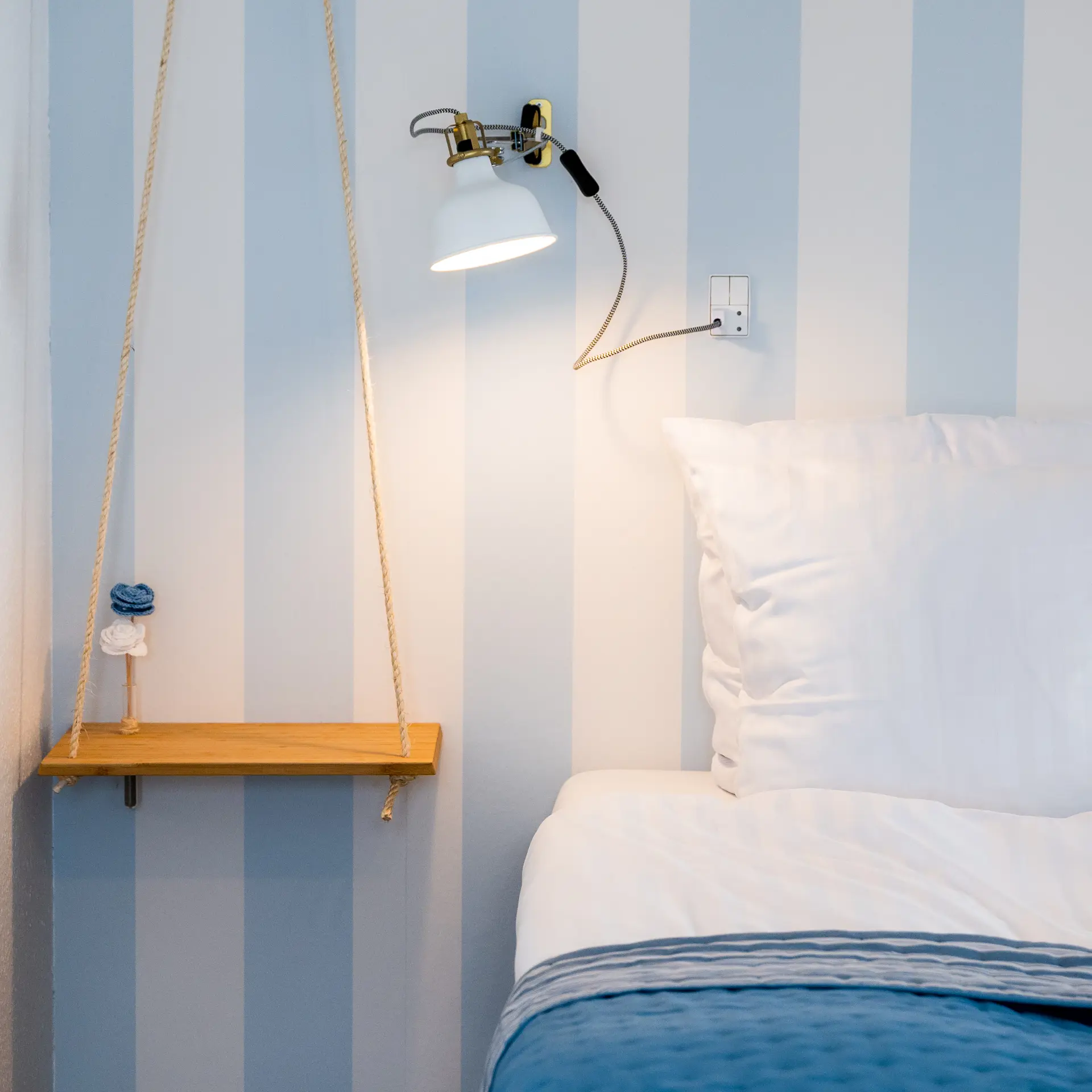
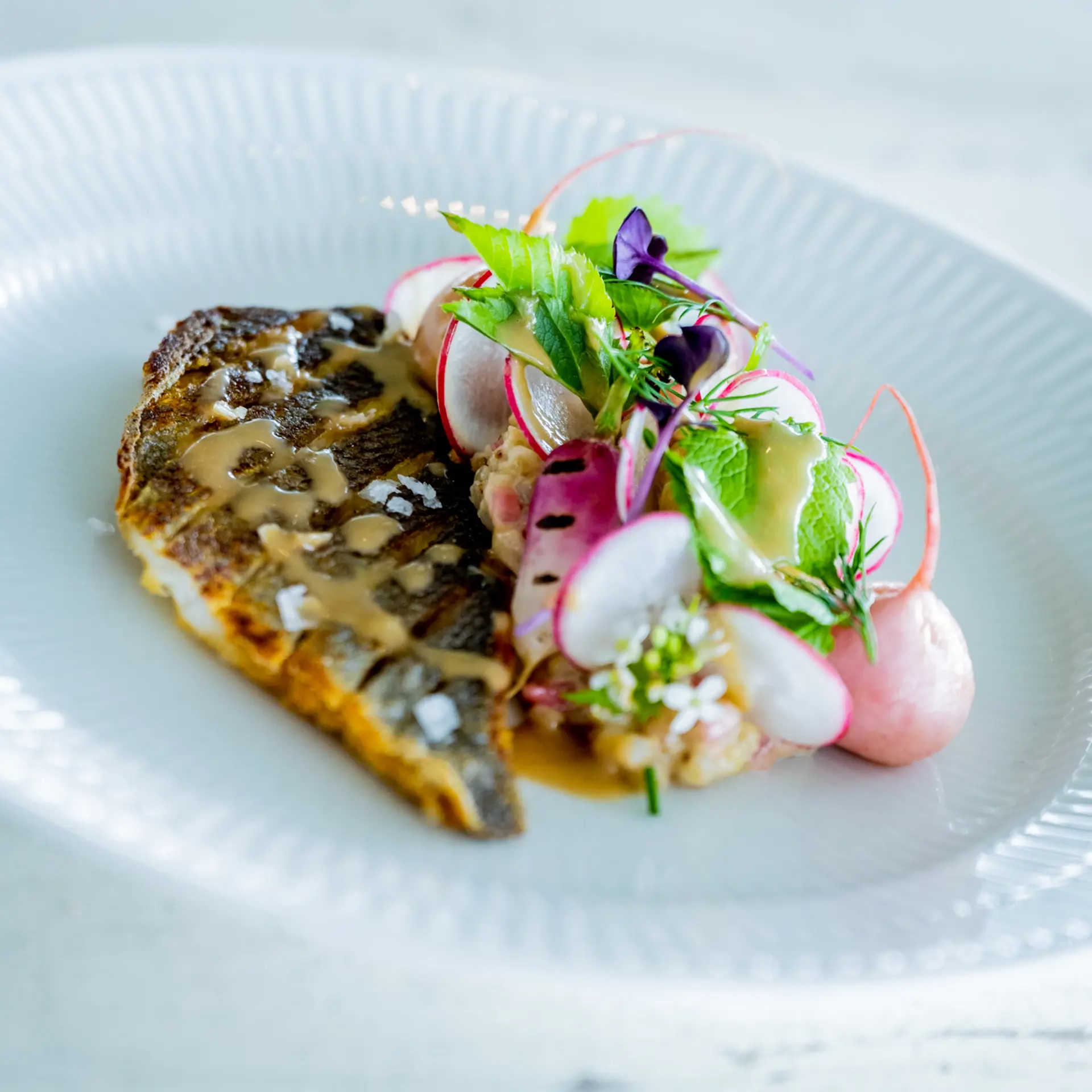
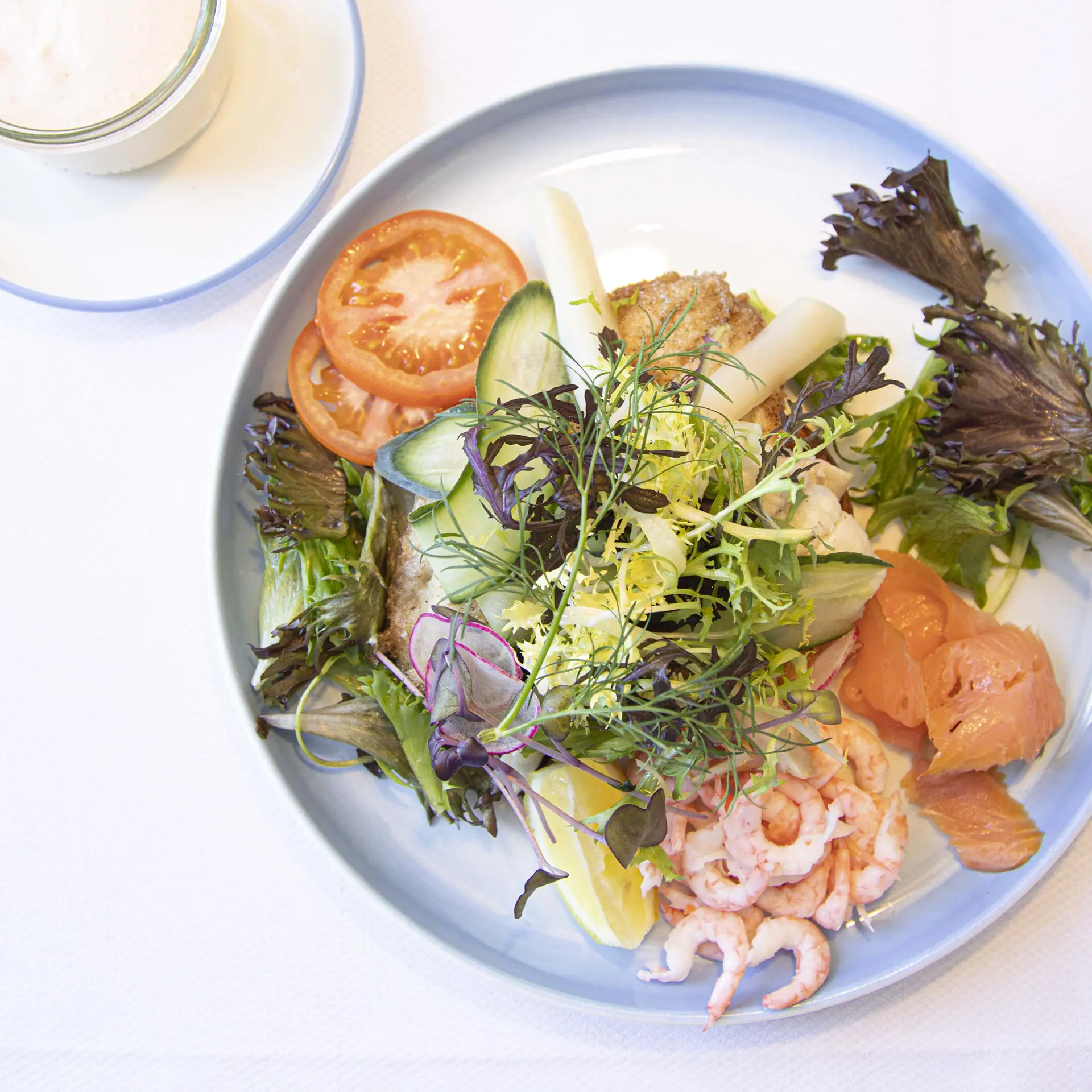
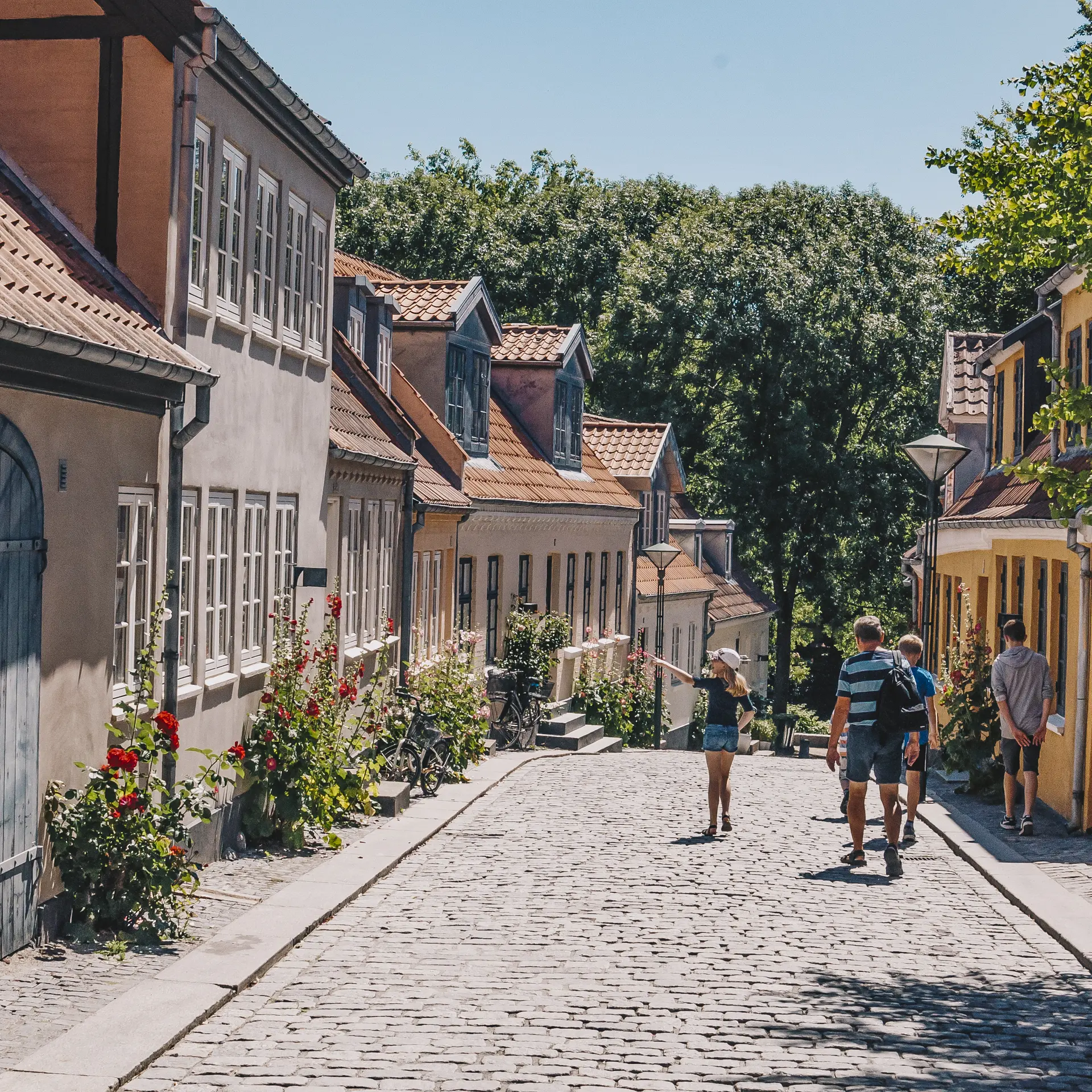
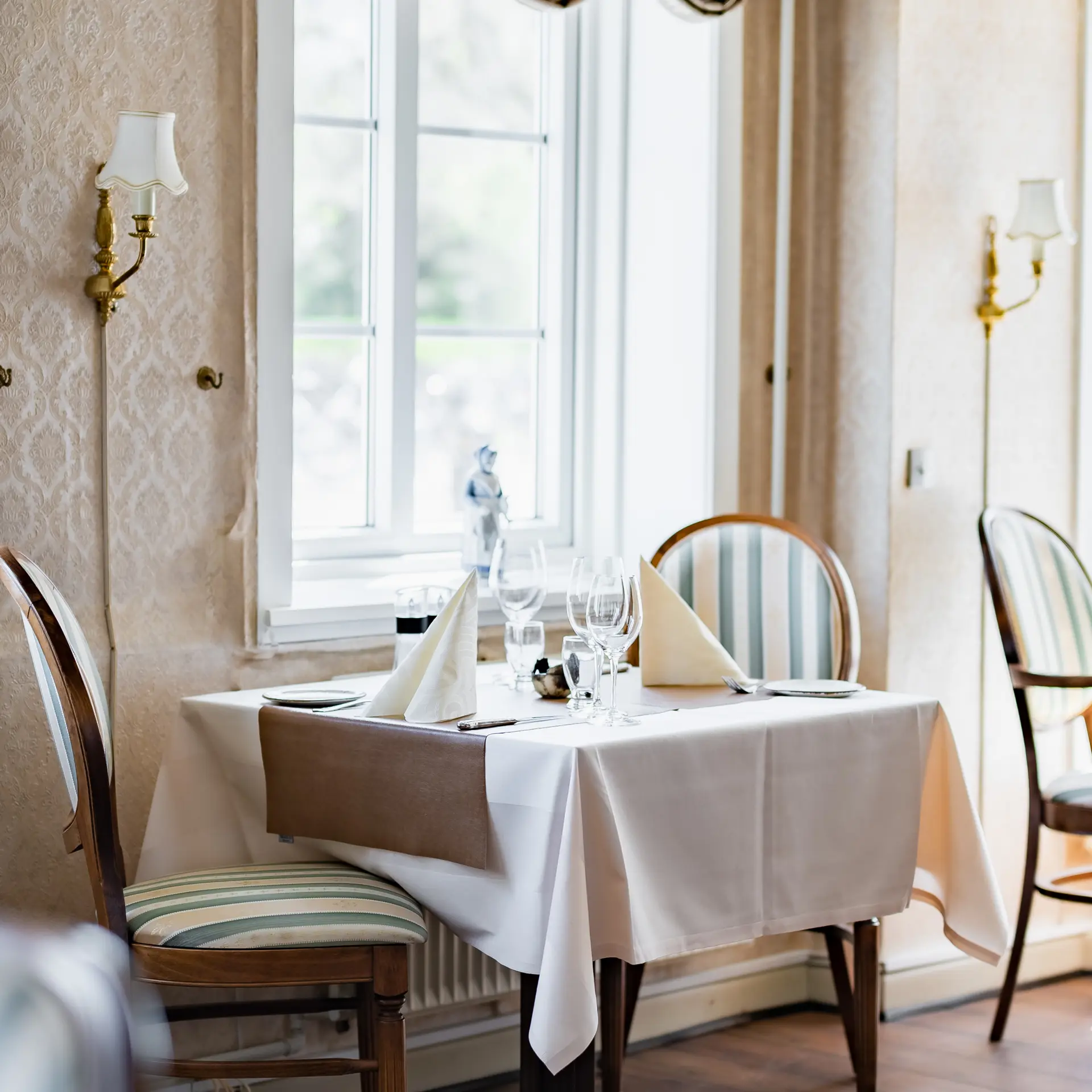
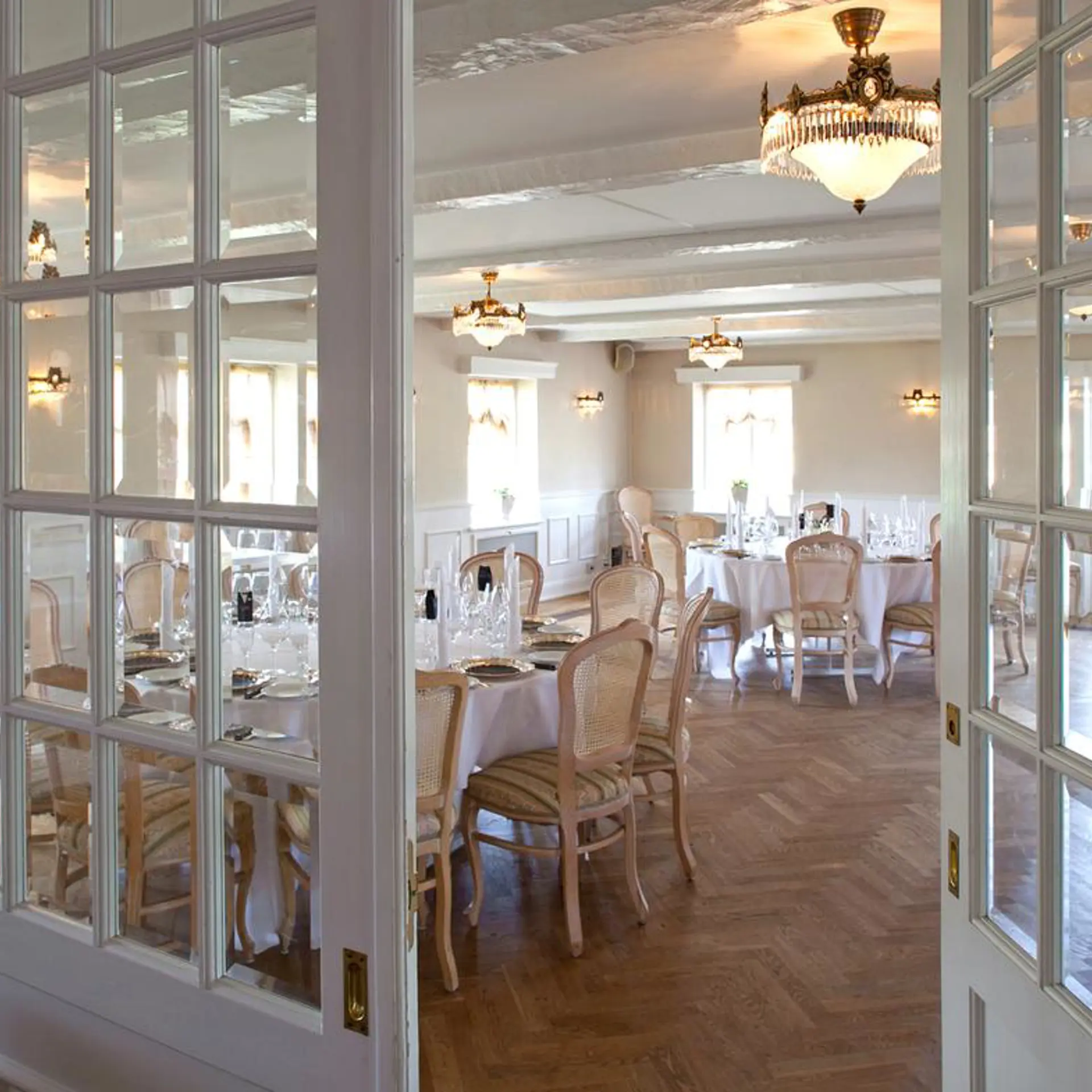
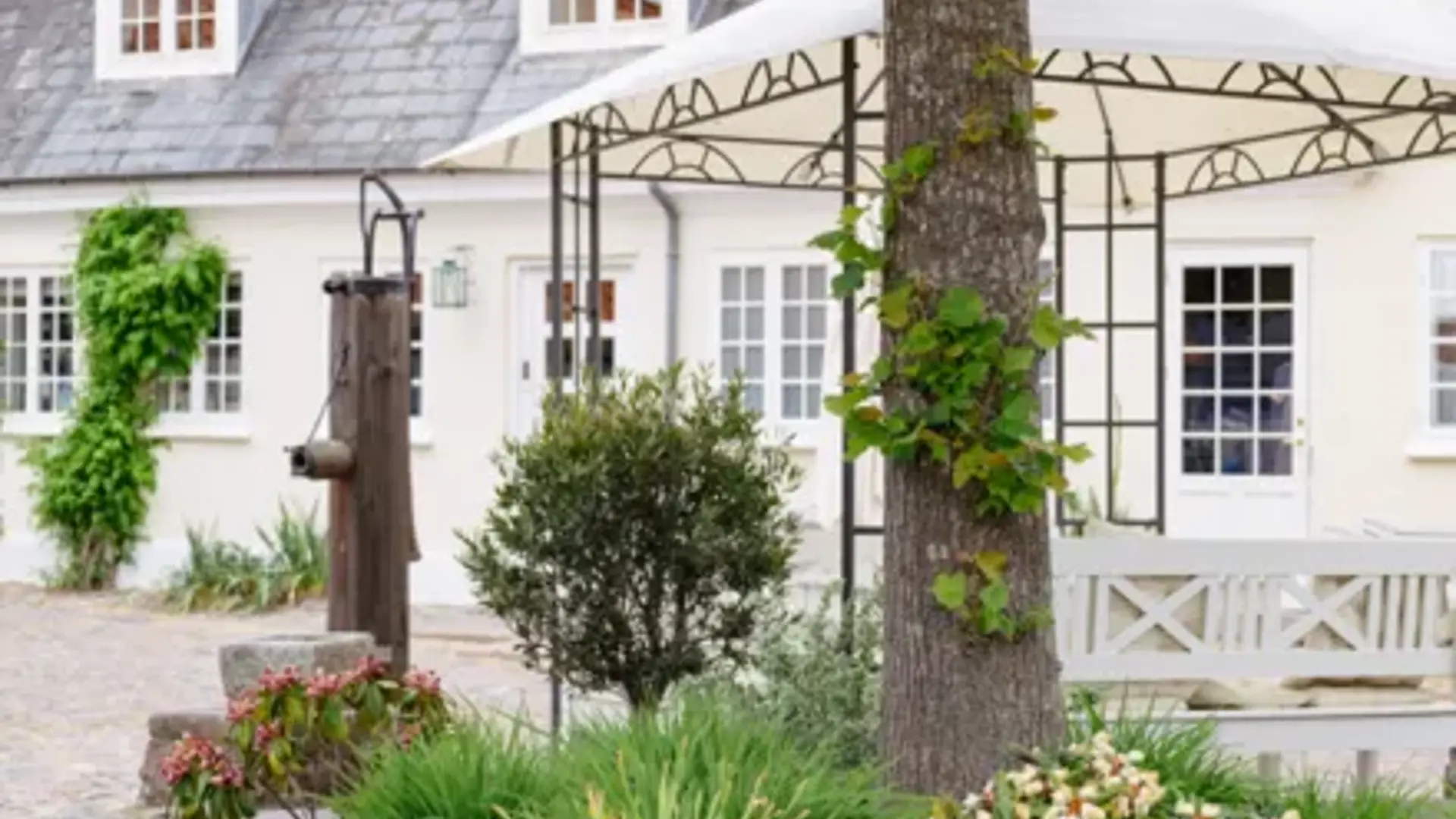
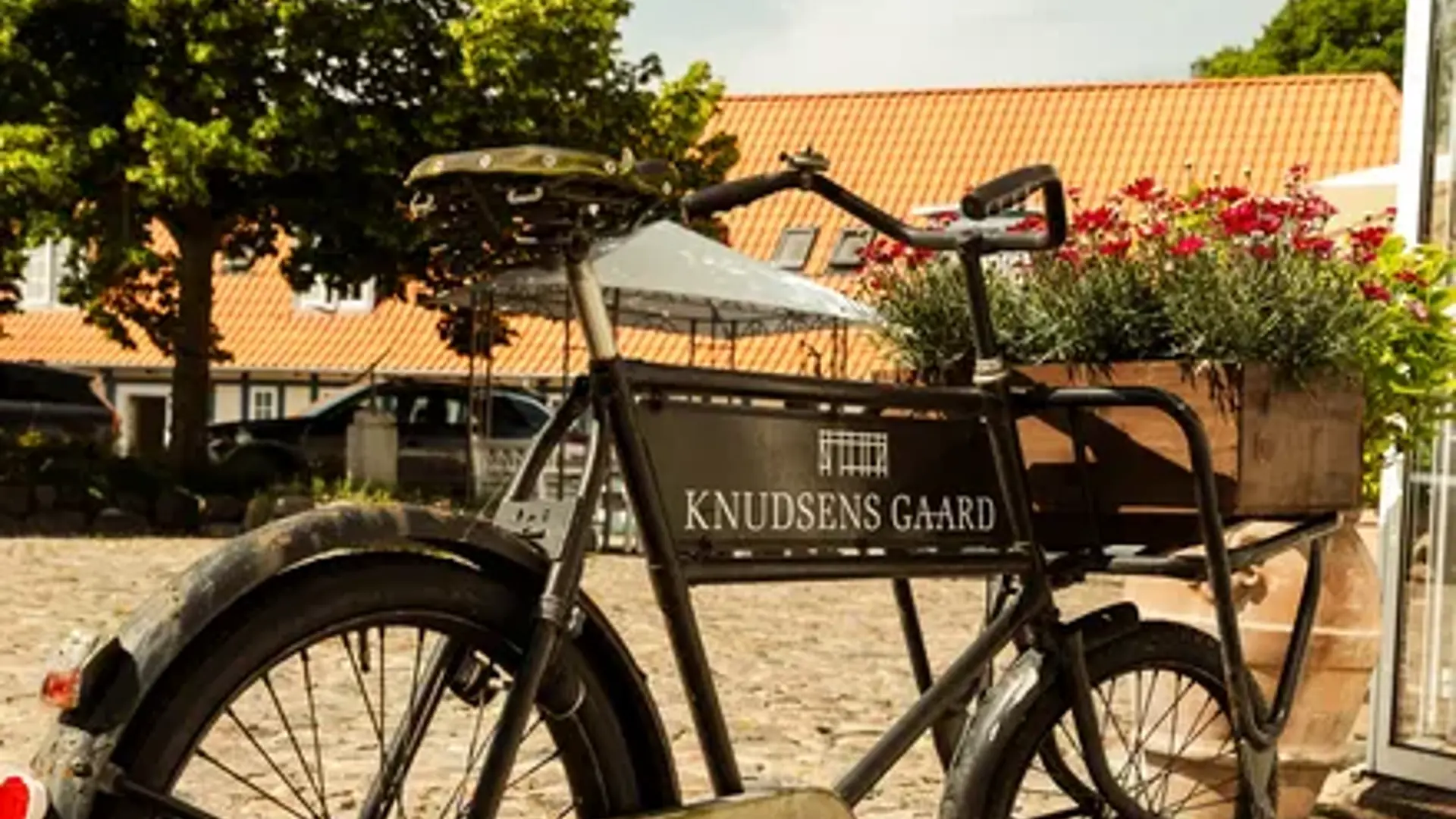
See calendar and prices: Standard rateHotel Knudsens Gaard in Odense emphasizes personal service, high quality and a peaceful atmosphere. The uncontested attention is on the guests, who must be able to enjoy a relaxed stay in green surroundings. The hotel rooms have a homely feel and the restaurant delivers fantastic culinary experiences.
Hunderupgade 2, 5230 Odense
Show map
Book min. 3 days before arrival
Includes per person:
Book min 3 days before arrival.
Includes per person:
Arrival day:
2. day:
Departure day:
0.91 km
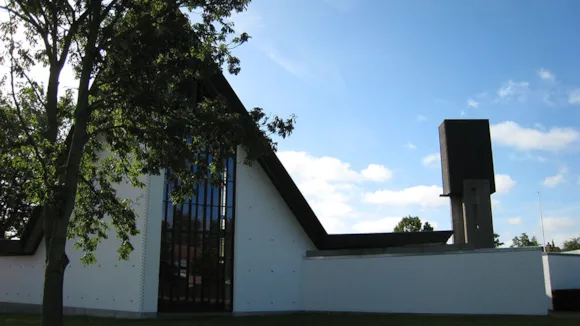
When Munkebjerg Church was inaugurated in 1961, it looked very different from traditional Danish churches. Architects Erik and Ebbe Lehn Petersen chose a hexagonal floor plan, a dramatic slate roof, and a freestanding bell tower. While the design sparked debate when the church was first built, it is now regarded as a notable example of modern Danish church architecture.
The interior also breaks with tradition. The space is broad and relatively short, while the pews are arranged diagonally to draw attention towards the altar. Wherever you sit, you remain close to the centre of the church. This creates a sense of intimacy that continues to shape the experience today.
The most striking artwork is the large stained-glass mosaic by artist Knud Lollesgaard, which forms the entire altar wall. Installed in 1983, the mosaic brings together architecture, light and symbolism in a single work of art. Its colours change with the daylight, giving the church interior a different character depending on the season and time of day.
Look out for the interplay of white walls, exposed concrete beams, the granite altar and baptismal font, and the prominent wooden cross in front of the mosaic. These materials are central to the church's character and reflect the simple, robust architectural style that defined much of the 1960s.
The church also features Skulptur 87, a sculpture that adds another artistic layer to the visitor experience. Together with the mosaic and the church furnishings, it demonstrates how art in Munkebjerg Church is not merely decoration but an integral part of the overall architectural design.
Munkebjerg Church was created during a period when many new churches sought to bring congregations closer to the heart of worship. As a result, the traditional separation between nave and chancel is almost absent, and the entire space feels centred around the altar. The architecture reflects the idea of community rather than distance between clergy and congregation.

0.94 km
The approximately 500 m² bunker was built in 1954 as the command centre of the Municipality of Odense. In the event of war or another major crisis, the mayor and selected key personnel would have gathered here to coordinate the city's response. Designed to operate independently from the outside world, the bunker remained in use until as recently as 2007.
As you move through the bunker, you will gain a unique insight into the emergency planning and realities that shaped life in Denmark during the Cold War. Many of the original rooms, installations and artefacts have been preserved, while the museum's exhibitions explore topics such as civil defence, the threat from the East and the preparations made by public authorities for a potential conflict.
The museum offers a fascinating glimpse into a period when the threat of nuclear war influenced everyday life and municipal command centres like this one played a vital role in emergency preparedness.
The guided tours take visitors through the bunker while bringing its history to life. Learn about the facility's purpose, the people who were expected to work here and the plans designed to keep the city functioning during a major crisis. Tours are included in the admission fee and provide valuable context for the many details found throughout the bunker.
Practical information:
1.26 km
"When I stand here at Nonnebakken, I find myself thinking about how this great fortress must have dominated the landscape across Funen. I also think about all the archaeological finds that are still hidden and well preserved underground – a source that could give us even more knowledge about the Viking Age if we one day investigate it further."
Mads Runge, Head of Development at Museum Odense
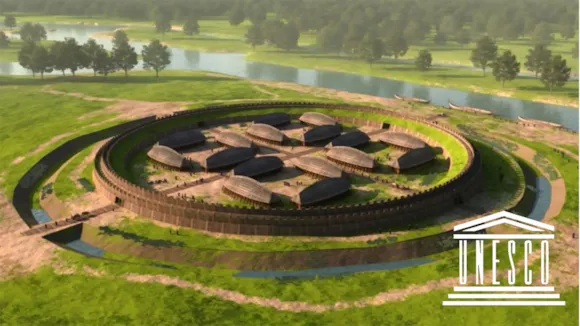
Nonnebakken was built around the year 980 during the reign of Harald Bluetooth and was one of the large ring fortresses constructed in several locations across Denmark towards the end of the Viking Age. The fortress measured around 180 metres in diameter and was built according to the same precise, circular principles as Denmark’s other ring fortresses.
The ring fortresses tell the story of a time when royal power was growing stronger and a king sought to unite and control his realm. Nonnebakken also stands out because of its location close to the early settlement by the Odense River – in an area shaped by people, trade and connections with the wider world.
For more than a thousand years, Odense has expanded across and around the old ring fortress. Today, Nonnebakken is therefore a place where history quite literally lies in layers.
You do not come here to see a reconstructed Viking fortress, but to stand on the very site where it once stood and discover the connection between the Viking Age settlement of Odins Vi and the Odense that later grew around it. The remains of the fortress are still preserved underground – in some places, just beneath your feet.
In 2023, Nonnebakken was inscribed on the UNESCO World Heritage List together with four other Danish ring fortresses: Aggersborg near Løgstør, Fyrkat near Hobro, Trelleborg near Slagelse and Borgring near Køge.
Together, they tell the story of Harald Bluetooth’s ring fortresses and the royal power that left a lasting mark on Denmark towards the end of the Viking Age. Nonnebakken is also Funen’s first UNESCO World Heritage Site.
Nonnebakken is just one of the traces left behind by Viking Age Odense. Across the city, you can discover stories of kings, churches, burial sites and ancient monuments that still connect present-day Odense with the city of more than 1,000 years ago. Download the Viking route PDF and discover more places where you can continue following the trail.
1.31 km
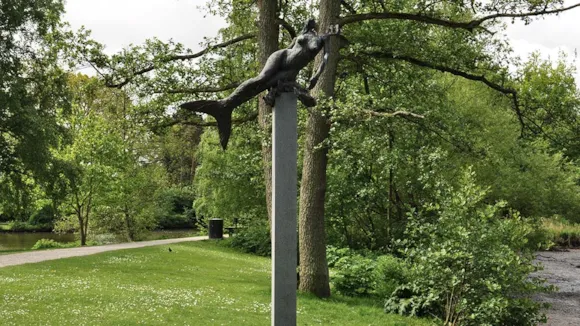
The mermaid is a mythical and magical creature, who lures people into their death with her song and her beautiful body.
This mermaid is placed on a 3-4-meter-high base so that we view her as from the deep of the ocean. Another distinctive feature of the sculpture is the abnormal head-to-body ratio, but this is a consequence of the water reflection which happens when you look up from the depths.
The sculpture is made in bronze and the base in granite and was revealed on June the 20th in 1998. The mermaid’s body is created to show sexual energy, which is emphasized by the slightly separated legs and distinct sex, that only gathers into a fin near the feet. The strength of its sexuality is highlighted as something raw, and a danger you put yourself in. The sculpture is, in its expression, almost an antithesis to the traditional understanding of the mermaid’s conventional innocence and beauty.
Hans Pauli Olsen (1957-) was born in the Faroe Islands. Many of his sculptures focus on human forms, often with a mystical, underlying note. They are expressive and naturalistic in their expressions. Many of his creations are created in clay before they are cast in bronze. This process allows the artist's creative process to be clearly visible in the final sculpture.
1.32 km
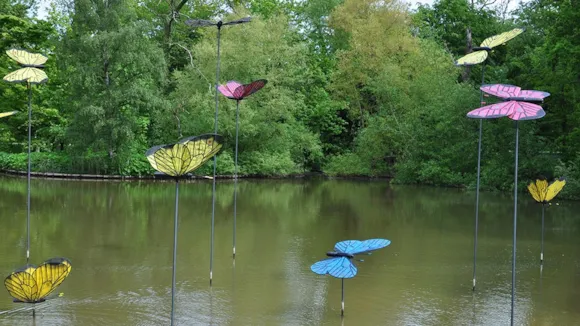
The butterflies make even more sense when you see them as part of the playground by the lake. Inspired by Thumbelina, the playground features oversized elements from nature, including water lily leaves, birds and butterflies.
In this way, part of the fairy tale has been brought to life in Munke Mose, where children can play among elements that are much larger than they would be in real life. It fits the story of Thumbelina perfectly: she is so tiny that flowers, leaves and animals become an entire world around her.
The butterflies are not a standalone work of art, but part of the overall setting around the playground and the lake. Here, inspiration from Hans Christian Andersen blends naturally into the green surroundings of the park, whether or not you already know the story.
For children, the butterflies and oversized natural elements are first and foremost part of the play experience. For adults and others who know Thumbelina, they add another layer to discover.
1.33 km
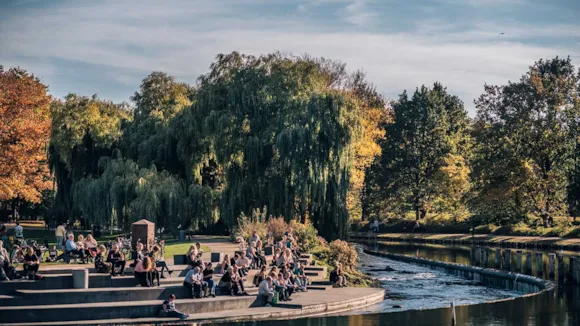
Munke Mose is a great starting point if you want to explore Odense on foot, on a run or by bike. The paths follow the Odense River and continue through the city’s green areas towards places such as Fruens Bøge.
You can also take a shorter walk around the park itself or stop by Saabyes Stryg, where the river runs through the fish passage. The wide steps down to the water are a good place to take a break and watch life along the river up close.
The large lawns offer plenty of space for picnics, play and exercise, and the combination of city life, water and green surroundings makes Munke Mose a natural stop on a walk or bike ride through Odense.
For children, the playground is one of the park’s highlights. It is inspired by Hans Christian Andersen’s fairy tale Thumbelina, and among water lilies, butterflies and oversized leaves, children can climb, play and explore. The playground is particularly suited to younger children and primary-school-age children and also includes water play.
Around Munke Mose, you will also find several works of art and sculptures. Among them are the colourful butterflies above the small lake, also inspired by Thumbelina.
During the boating season, you can experience the Odense River from the water as well. Odense Aafart operates from Munke Mose, and you can rent canoes and pedal boats, among other options. These activities are not available all year round, so check the current options with Odense Aafart before your visit.
Munke Mose has not always been the green park you see today. The area was originally made up of wet meadows and marshland along the Odense River and belonged to a monastery during the Middle Ages.
The City of Odense began purchasing land in the area in 1881, and gardener Christian Dæhnfeldt was later among those who helped finance the development of the park. In the early 20th century, the area was transformed into the city park that today forms a green link between the city centre and the areas further along the river.
The small lake in Munke Mose is a remnant of the former mill pond by Munke Mølle and is therefore a visible trace of the area’s history.
1.36 km
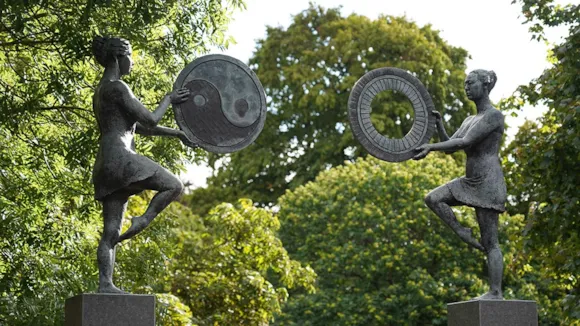
Balancebuen is located by Klaregade Bridge, close to the Odense River and the entrance to Munke Mose. The sculpture was created in connection with World Expo 2010 in Shanghai, where Odense was represented with its own pavilion. The artwork symbolises the connection between Odense and Shanghai and tells a story of balance between different cultures, ideas and ways of life.
The sculpture's name refers to the balance that exists between opposing forces. Its inspiration comes in part from the Chinese philosophy of yin and yang, where opposites are seen not as conflicts but as elements that complement one another.
The sculpture consists of two bronze figures standing on top of tall granite columns. The figures are frozen in balancing poses inspired by tai chi, the Chinese practice that emphasises calm, concentration and harmony.
Each figure holds a large circle in front of her. One circle features H.C. Andersen's papercut The Sun Face, linking the sculpture to Odense's most famous cultural heritage. The other symbolises the cycles of life and nature. Together, they reinforce the artwork's theme of balance and connection.
Balancebuen was created by the sculptor Mette Agerbæk (1960-2011). She studied at the Funen Academy of Fine Arts before continuing her education at the Accademia di Belle Arti di Roma in Italy. In 2004, she was named Funen Artist of the Year.
Agerbæk often worked with figurative sculpture, exploring themes of movement, balance and the human body. Balancebuen is considered one of her major works and remains one of the most visible examples of her art in Odense.
Many people pass Balancebuen on their way between the city centre and the green areas along the Odense River. Next time you cross Klaregade Bridge or visit Munke Mose, take a moment to look more closely at the many symbols hidden within the sculpture. Here, stories of H.C. Andersen, Chinese philosophy and Odense's international outlook come together in a single work of art.
1.44 km
1.44 km
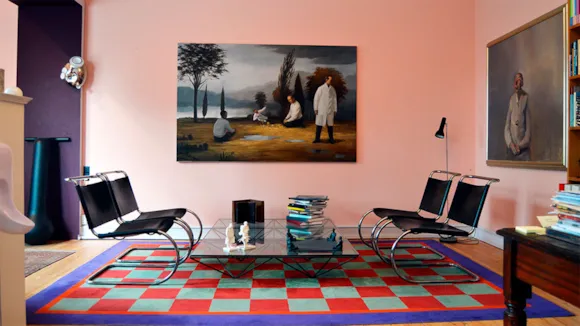
You'll have to ring the doorbell and climb a few steps before you're welcomed inside the gallery. Here you'll find a fully furnished apartment with artworks scattered all over the walls, shelves and windowsills. Nothing looks like a regular gallery here - no white walls and no artificial, uniform light from ceiling spotlights. The apartment is almost a work of art in itself. Each room is characterised by a different colour, which often interacts with the artwork. Regulars often notice how the whole apartment changes colour every time there is a new exhibition. For most artists, it's also a refreshing experience to see their work displayed in a more unconventional context - although some of the more experienced artists are already familiar with the concept from abroad.
If you want to be sure to get in, make an appointment in advance.
1.48 km
Get up close to the animals
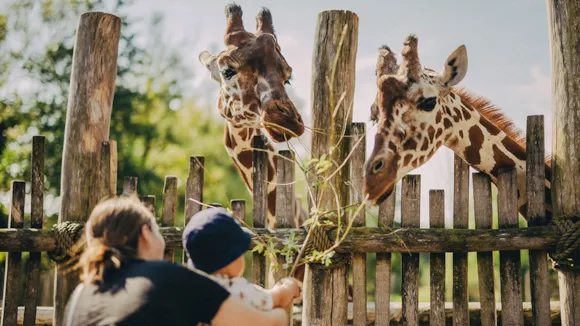
A visit to Odense ZOO is about much more than simply observing animals. Throughout the day, you can experience feeding sessions, training demonstrations and talks where the keepers share insights into animal behaviour, habitats and the challenges many species face in the wild.
Among the animals you can see are giraffes on the African savannah, penguins, sea lions, tigers, camels and monkeys, as well as the only manatee habitat in Denmark. The programme is regularly updated with new experiences and activities for both children and adults.
Fun for children of all ages
For many families, the playgrounds are almost as popular as the animals themselves. Children can burn off energy between animal encounters, while adults take a well-earned break.
The zoo also offers a variety of activities and experiences where children can learn more about animals, nature and biodiversity through play and hands-on activities.
More than a zoo
Odense ZOO is actively involved in nature conservation, research and international breeding programmes for endangered species. By visiting the zoo, you help support efforts to protect wildlife and natural habitats in Denmark and around the world.
Throughout the zoo, you can learn more about individual species and the conservation projects in which the zoo participates.
Are dogs allowed at Odense ZOO?
No, dogs are not permitted in Odense ZOO for the safety and wellbeing of the animals. Guide dogs and service dogs are welcome, although they are restricted from certain areas with free-roaming animals.
Is Odense ZOO suitable for children?
Yes, Odense ZOO is one of Funen's most popular family attractions. In addition to the many animals, you will find playgrounds, family-friendly dining options and activities for children throughout the zoo.
Is there parking at Odense ZOO?
Yes, a large public car park with free parking is located directly opposite the main entrance. Accessible parking spaces and charging stations for electric vehicles are also available.
Can I bring my own food and drinks to Odense ZOO?
Yes, you are welcome to bring your own food and enjoy it in the zoo's picnic areas. There are also several cafés and restaurants throughout the zoo if you prefer to buy food and drinks on site.
How long does a visit to Odense ZOO take?
Most visitors spend between three and five hours at Odense ZOO, although it is easy to fill an entire day with animal encounters, playgrounds, dining breaks and daily feedings.
Is Odense ZOO accessible for wheelchair users?
Yes, most of Odense ZOO is accessible via wheelchair-friendly paths, and accessible toilets are available throughout the zoo. Wheelchairs can also be borrowed by prior arrangement. Visitors with an official companion card may bring a companion free of charge.
1.5 km
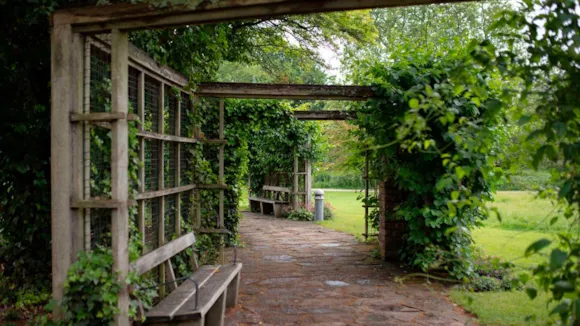
You will find the fairytale garden by Odense Å, just behind Odense Cathedral and Odense City Hall. Via a nice wooden bridge, you can cross the river over to the rotunda, a small circular island in the garden. Depending on the season, the beds here are bursting with spring bulbs, dahlias and perennials, and you can sit on the benches and enjoy the view. The cosy wooden staircase along the water invites you to sit and watch the water and the ducks.
In 1949, the H.C. Andersen statue, created by Louis Hasselris, was placed in the garden. Close by in the river, Erik Heide's sculpture The Paper Boat from 1985 sails along, and there are several other sculptures around the park.
The pergola on the rotunda, the bridges in the garden and the Chinese wall have been designed and executed in quality materials, worthy of a town hall garden. The original pergola showcased a beautiful pattern of diamond-shaped beds.
The garden was laid out in 1876 by the Reading Association, and initially, it was closed to ordinary visitors. The reading association was a library for wealthy citizens, and only people with access cards could visit. In 1942, the Reading Association transferred the garden to Odense Municipality, and a completely new park emerged. Behind the project were the garden architects C. Th. Sørensen and P. Wad, in collaboration with architect B. Helweg-Møller, who was the architect of the town hall.
1.58 km
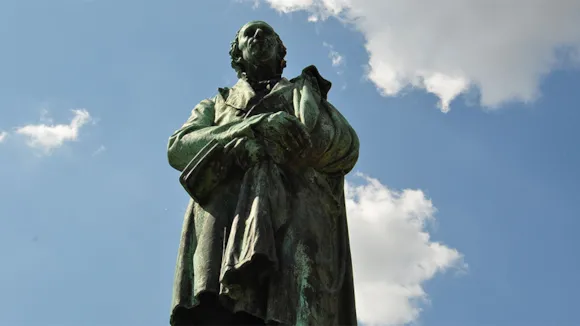
The statue of H.C. Andersen in Eventyrhaven is more than a monument to a famous writer. It reflects years of dedication and strong local support. Created by sculptor Louis Hasselriis, the bronze statue was unveiled in 1888 after the people of Odense raised the funds needed to commission and erect the work.
The statue has had a journey of its own through the city. It originally stood in Kongens Have (The King's Garden) before being moved to Gråbrødre Square. In 1949, it was relocated to its present setting in Eventyrhaven, where it remains today. It is now one of Odense's most recognisable monuments to H.C. Andersen and one of several sculptures throughout the city that celebrate his life and legacy.
Louis Hasselriis devoted many years to the project and worked tirelessly to secure a place for the statue in H.C. Andersen's hometown. Even the smallest details were carefully considered. According to local tradition, the poet's overcoat was draped over one shoulder to create a more balanced and visually appealing silhouette when viewed from behind.
The statue portrays H.C. Andersen much as many people imagine him: upright, thoughtful and quietly observing the world around him. It is a fitting place to pause and reflect on the man behind the fairy tales that made the author from Funen famous far beyond Denmark's borders.
Its location in Eventyrhaven gives the statue a special place among Odense's many H.C. Andersen attractions. Surrounded by green spaces and situated within easy walking distance of both Odense City Hall and St Canute's Cathedral, it forms a natural part of the story of H.C. Andersen's life and legacy in his hometown.
The statue is also a stop on the walking tour In H.C. Andersen's Footsteps, which takes visitors closer to the places, people and stories connected to H.C. Andersen and the city where he was born.