Small Danish Hotels is now Stays. Only our name has changed. Everything else stays the same.
How to make a booking
Click the "See calendar and prices" button to choose dates and see the room selection.
See calendar and prices: Flambéing StaySmall Danish Hotels is now Stays. Only our name has changed. Everything else stays the same.
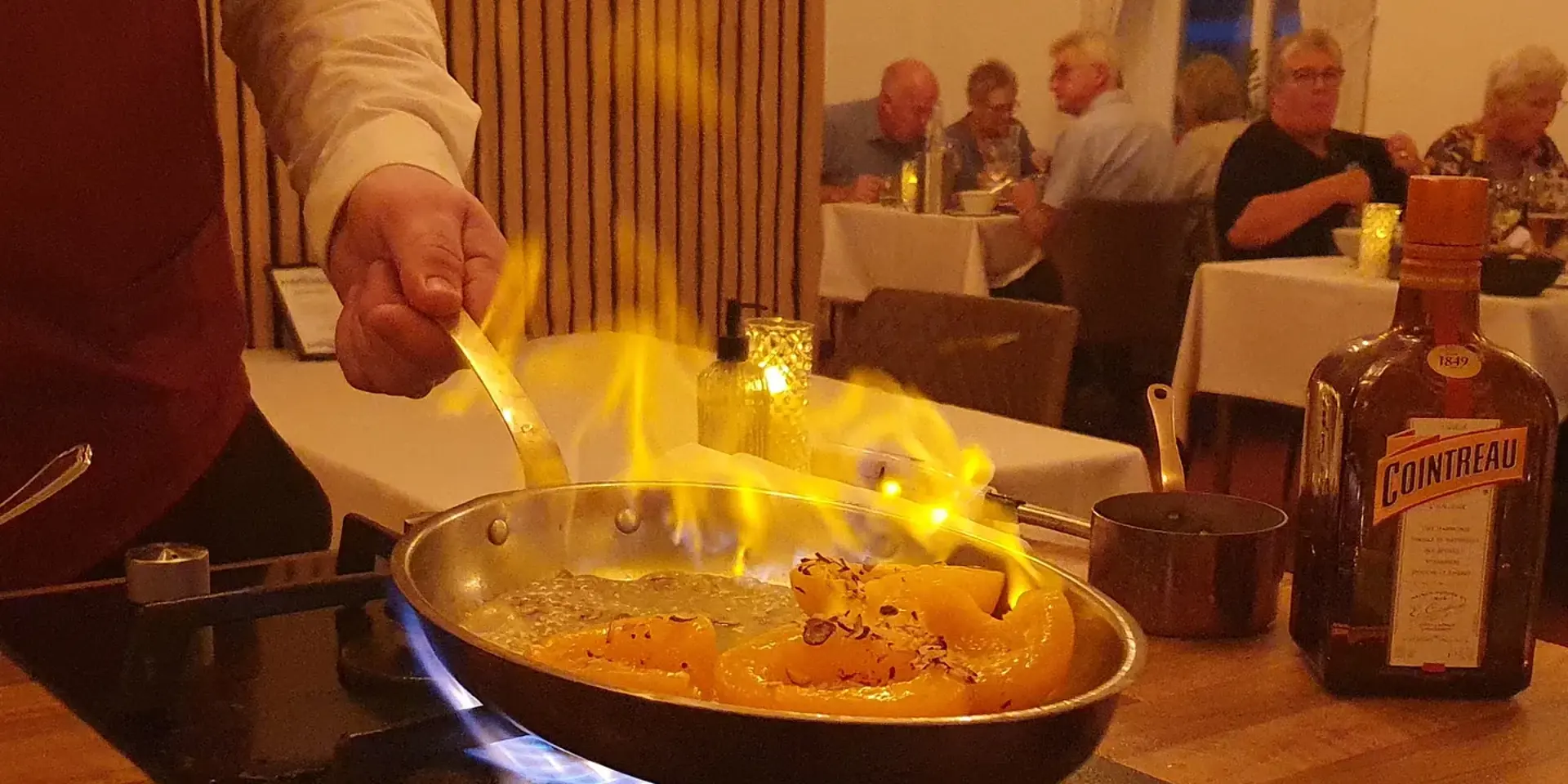
Includes per person:
Menu on arrival day:
Menu on day 2:
Click the "See calendar and prices" button to choose dates and see the room selection.
See calendar and prices: Flambéing StayHotel Kløver Es is located near Rødekro, surrounded by beautiful nature and close to some of the area’s charming towns and attractions. Here, you can enjoy a charming and atmospheric hotel with a focus on delicious food, relaxation and Southern Jutland hospitality – perfect for a cosy getaway from everyday life.
Brystrupvej 2, 6230 Rodekro
Show map
13.61 km
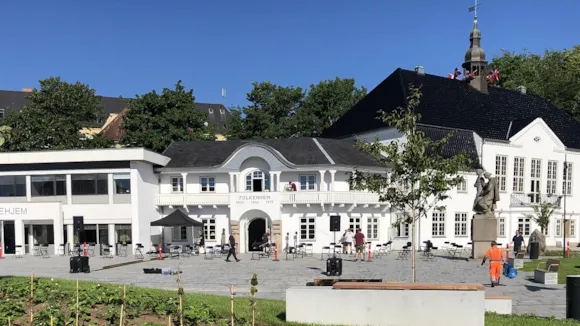
The Genforeningspark (Reunion park) at Folkehjem in Aabenraa opened on 15.06.2020, on the 100th anniversary of Sønderjyllands reunification with Denmark.
The park represents both the historical and symbolic story of the struggle for Danishness Sønderjylland.
The park, with its green areas and playground, is a sanctuary for the citizens of the municipality with room for play and fun - even after the anniversary year 2020.
13.79 km
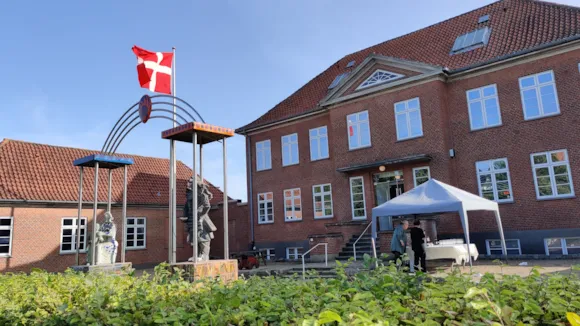
Set sail at Kulturhistorie Aabenraa – the town’s maritime museum. The museum reflects the proud seafaring tradition that shaped Aabenraa in the 18th and 19th centuries and later became an important part of the town’s identity. Learn about shipbuilding, shipyard history, and voyages that sailed to distant shores in Asia, America, Australia, and Africa.
Here you can experience one of Denmark’s largest collections of ship portraits, which once hung in captains’ homes, see a furnished captain’s parlour, discover the treasures and souvenirs that sailors brought back to Aabenraa, and read about the fates of those who went to sea – and perhaps, perhaps did not return home.
In the basement, there are activities for the youngest visitors, where you can, for example, draw your own maritime portrait.
The museum also has a small souvenir and museum shop where you can buy everything from postcards and books to lovely souvenirs as a memento of your visit to Kulturhistorie Aabenraa.
Opening hours:
The museum is closed during the winter and will reopen and opens again on March 26th 2026.
Don't forget to visit the museum om March 28th 2026, where entrance is free for everyone.
Regular opening hours will then be Thursday – Sunday: 12.00–4.00 pm.
16.91 km
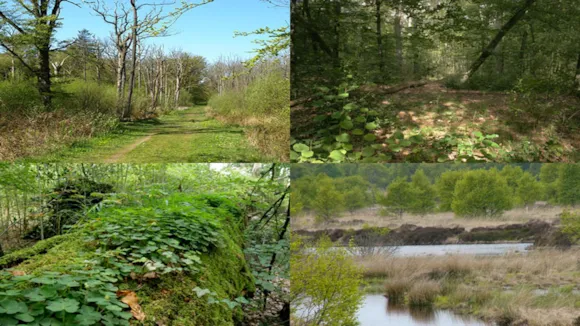
Draved Forest is one of the best developed natural forests, where the untouched parts are reminiscent of primeval forest. Here grows the tree species that dominated in the Stone Age, the forest linden. The robustness of the natural forest was proven during the hurricane of December in 1999. The large raised bog to the west is partly drained and cultivated, but still an important natural area and therefore worth a visit.
The countryside
Draved Forest is one of the few older forests between Aabenraa and the North Sea. This is partly due to the fact that it has been well sheltered by the surrounding, hard-to-reach bogs, which had a much greater distribution in the past. The forest is located on a northeastern tributary of Abild Bakkeø with very different soil conditions. The rich clay soil from the previous ice age is in places covered by low flying sand dunes, deposited during the most recent ice age, when West Jutland was not covered in ice. In places, shiny and edge-worn stones are seen in the surface from that time during the last ice age when fleeing snow and sand jogged over them.
https://www.fredninger.dk/fredning/draved-skov-og-kongens-mose/
21.56 km
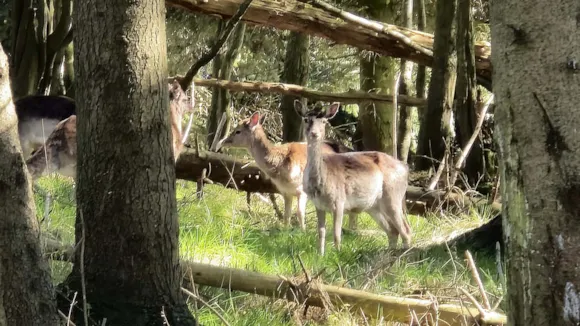
The deer park Haderslev Dyrehave is attractively located close to the western part of the lake Haderslev Dam at Nørskovgård. The deer park was established in 1994 and covers around 100 hectares. There are about 200 fallow deer and 20 red deer in the deer park and around 70 calves are born every year. There are ample opportunities to see both red deer and fallow deer, which often move around in herds and like the open areas. There are 4 entrances/gates to the deer park and a number of paths, which are also suitable for disabled visitors. You are advised to keep to these to avoid scaring the animals.
Tours of the deer park
A number of public tours take place in and around the deer park, including rutting tours in the autumn and feeding tours in the winter. Check the local press or www.udinaturen.dk.
The meeting place is usually at Nørskovgård, Nørskovgårdvej 24, 6100 Haderslev.
Facilities at the deer park
Bergs Plads is located at the north-east end, just outside the deer park. A favourite destination for visitors, it is equipped with several barbeques and tables with benches. The lake boat Dorothea also stops here on her trip around Haderslev Lake. Between Bergs Plads and Bergs Hus there is a camping area with shelters. The camping area has to be booked if you’re a group of more than 6 people – for more information use the link. There is a public toilet at Bergs Hus and drinking water is also available. At Sophie’s spring you can drink spring water of fine quality. Queen Margrethe II’s viewing point: Here you can enjoy the magnificent view over the small lake Hindemade, Haderslev town and the larger lake Haderslev Dam.
25.44 km
26 km
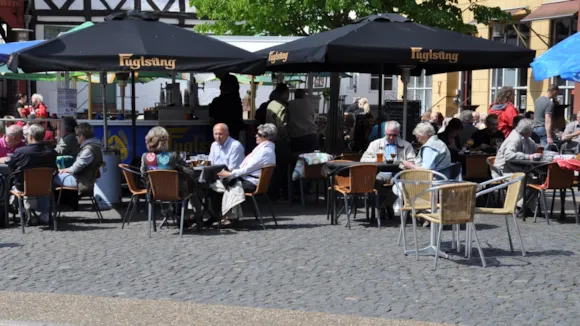
Torvet (the Square) was built as a place to hold markets and conduct trade and was the centre of Haderslev for many years. Here, you would find three large yearly markets and weekly market-days, where the surrounding farmers and peasants could sell their goods to the city-dwellers.
Torvet in Haderslev is the best-preserved medieval square in Denmark. For centuries, the houses surrounding the square housed the richest and most influential citizens in Haderslev; most were merchants, and many were members of the city council, magistrates and some even mayors.
Through 700 years Torvet was the absolute centre of the city, but during the past century the town centre has gradually gravitated towards the north, partly due to the construction of the other square in Haderslev, Gravene, in 1880, so that Torvet today lies to the southern edge of the city centre.
Even though Torvet is no longer the centre of the city, there is still plenty of hustle and bustle. Today, the square lies surrounded by stores and restaurants with outdoor-dining, so you can enjoy a cold drink or a delicious plate of food in the beautiful historic surroundings.
26.06 km
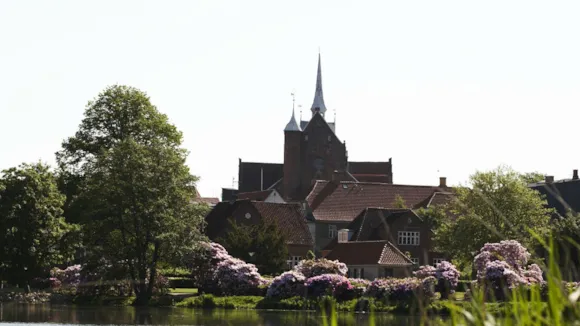
The Cathedral is first and foremost the church of the parish; the framework that winds itself around human life in celebration and joy, pain and mourning. Then, it is the entire city's church; anyone can come here whether they are a member of the parish or not. Finally, the Cathedral is also the church of the entire diocese; the centre of all major events in the diocese.
The Cathedral is not a museum. Like all other churches it is in living use. But is holds a fascinating and eventful history, as well as fine artwork and fixtures.
Queen Margrethe II designed 4 antependiums (altar cloths) as well as 4 matching chasubles. The chasubles can be seen up close in glass cases beneath the choir. They contain central Christian symbols, which shows how extensive the Queen's knowledge is and how anchored she is in the Christian faith.
Everyone is welcome to visit the Cathedral, either to have a quiet moment for thought or to see the many interesting things the Cathedral has to offer.
Tours can be arranged during opening hours. Contact the vergers at +45 20 53 49 81 best between 10am-3pm, or at email: domkirketjener@hado.dk. Photography is allowed in the church for private use, but is not allowed during church functions.
Memorial Chapel for the Schlesinger Regiment. Some Fridays the Schlesinger Music Corps (SMUK) marches to the Cathedral to turn a leaf in their memorial book over fallen soldiers from their regiment. It is a festive feature and should be experienced if you are close by.
Concerts: During the summer there are organ-concerts every Friday afternoon as well as frequent evening concerts.
The Cathedral is closed for visitors during church functions in the opening hours.
The Cathedral is also closed for visitors around the holidays (Maundy Thursday, Good Friday, Easter Sunday, Great Prayer Day, Christ's Ascension, Pentecost, Whit Monday, First day of Christmas and Second day of Christmas).
Until June 2020 there is limited access for the walking impaired, as you need to climb a few steps to enter the church, and a ramp is not yet available.
Haderslev Cathedral is also the starting point for the Camino Haderslev Næs trail that winds through Haderslev and its surrounding areas in 9 stages.
26.23 km
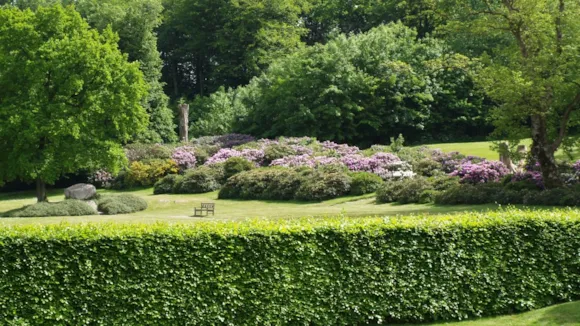
Go on a trip to Gram and visit the beautiful Castle Park, which is one of Gram's pearls. Enjoy the beautiful flowers and take a walk in the scenic surroundings.
The park was originally constructed around year 1700 as a baroque garden, and, amongst other plants and trees, you will find Scots Pine from 1750. Gram Castle Park was remade and renovated in 1991, and renovated again in 2000, after serious damage following the 1999 december-hurricane.
The park is open to everyone, all year around. Especially in the spring, when the rhododendrons and azaleas blossom, a visit to the Castle Park is a favored excursion.
Open all year, from sunrise to sunset.
The park and forests are free to visit.
27.07 km
28.58 km
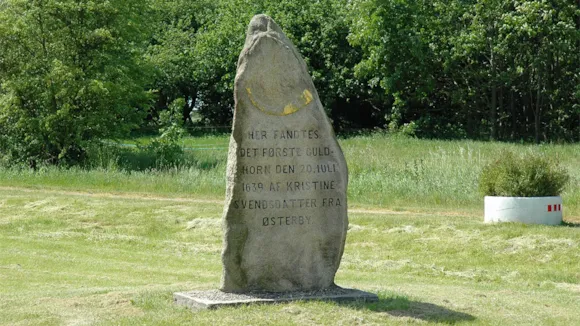
The famous Golden Horns were found at Gallehus, the first by a lace maker, Kjerstine Svendsdatter, in 1639, and the second in 1734 by Erik Lassen, a small farmer.
The sites are marked by memorial stones. The horns likely dated from about 400 AD and were probably used as part of some sort of religious ceremony.
They were sent to the Royal Treasury in Copenhagen for safekeeping but were stolen in 1802 and melted down.
Copies can be seen in Tønder Museum.